
.webp)

"The Mediterranean Flower"
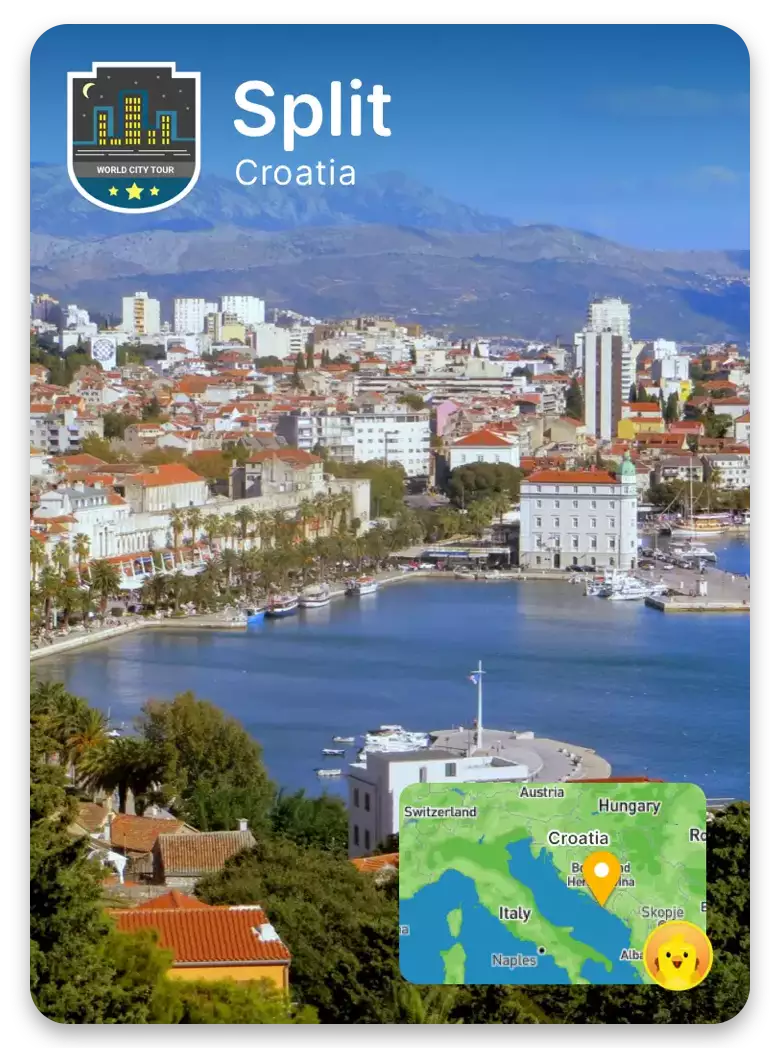
Photo by Kate Tann
Greek sailors founded a colony here in the 3rd or 2nd century BCE and called it Aspálathos. They chose this sheltered Adriatic harbor for trade, then the Romans arrived and took control.
Around 293 CE, Emperor Diocletian chose this very spot for his retirement palace. After two decades ruling an empire from Britain to Persia, executing Christians and reshaping the economy, he planned a quieter life.
In 305 CE he moved in and became history’s most famous retiree. He reportedly grew cabbages in his gardens while watching successors battle for power.
The palace was more than a residence. It sprawled across nine acres with thick walls, temples, and quarters for guards and servants.
Diocletian died around 311 CE. His palace endured long after him.
Everything changed in 639 CE when Avars and Slavs sacked nearby Salona. Refugees fled into the abandoned palace and stayed.
They built houses in imperial rooms and markets in ancient courtyards. A Roman mausoleum became a Christian cathedral, so the emperor who killed Christians ended up with a church in his tomb.
Split then bounced between empires like a diplomatic hot potato. Byzantines claimed it, then Croatian kings, then Hungarian royalty, and Venice ruled for nearly four centuries.
The Venetians fortified the harbor and stamped the city with their winged lion. Austria took control in 1797 after Napoleon dissolved Venice.
World War II brought horror. Italy occupied Split in 1941, and Germany seized it in 1943.
The Nazis deported Jewish residents and executed resistance fighters. Allied bombs damaged the old town.
In 1944 Yugoslavia’s communist partisans liberated the city. Split then became part of socialist Yugoslavia.
War returned in the 1990s. After Croatia declared independence in 1991, Yugoslav forces shelled Split from sea and mountains until Croatian forces secured Dalmatia.
Today about 3,000 people live inside the palace walls. You can eat where Roman guards once patrolled, shop in 1,700-year-old basements, and watch locals lean on ancient columns like street furniture.
Game of Thrones filmed in the palace cellars. Diocletian’s basements appeared as Daenerys’s throne room in Meereen.
Each evening the Riva waterfront fills for the korzo. It is part exercise, part gossip, part fashion show.
Split’s devotion to the Hajduk soccer club borders on religion. When Hajduk plays Dinamo Zagreb, the city stops.
Explore the palace’s underground halls where servants once worked. Climb the cathedral bell tower for views of red roofs and an island-dotted sea.
Hike Marjan Hill’s pine trails for shade and breezes. Swimming spots carved into the rocks below offer relief from the summer heat.


Points Available
| Sticker | 400 XP |
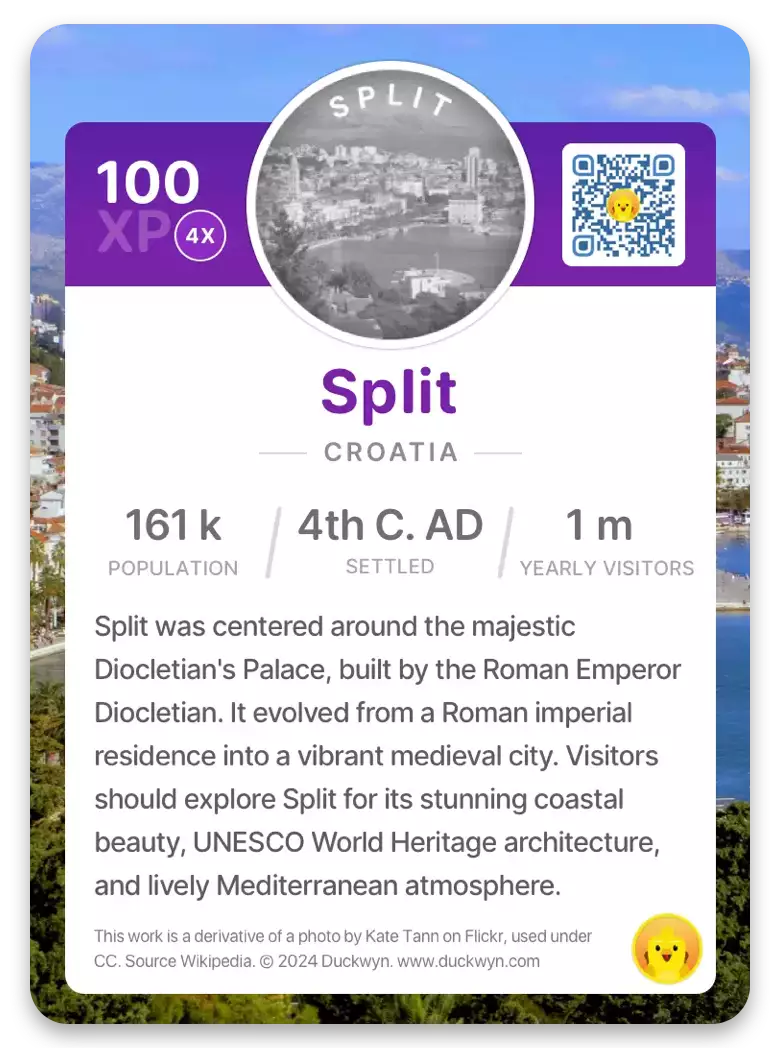
| Trading Card | 100 XP |
| Total | 500 XP |