

Japan
Discover Japan
Fun Foods
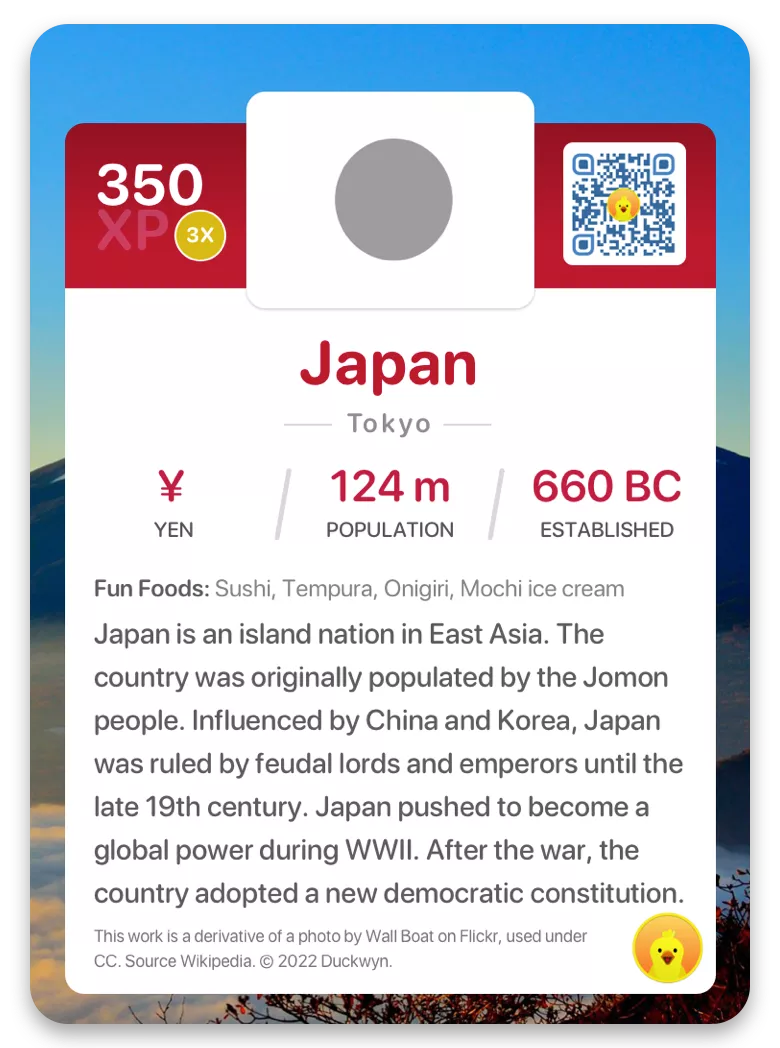
Sushi, Tempura, Onigiri, Mochi ice cream
For 250 years, Japan pretended the rest of the world didn't exist. No one in, no one out. When they finally opened the doors, they had a lot of catching up to do.
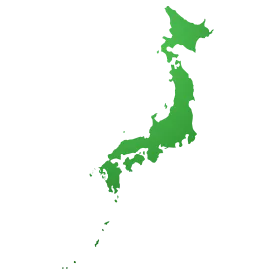
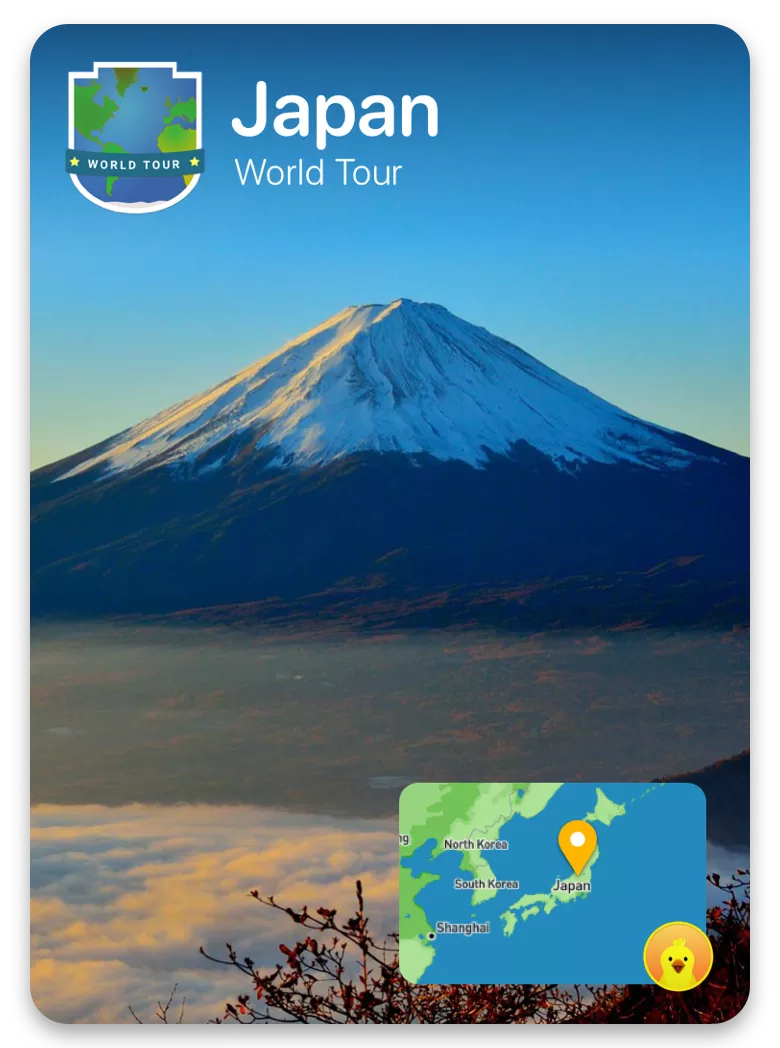
Japan is a chain of nearly 7,000 islands off the coast of Asia. Mountains, volcanoes, and earthquakes shape daily life. Mount Fuji towers over everything, a perfect snow-capped cone.
The Japanese emperor has sat on the throne for over 2,000 years, longer than any other royal family in history. For most of that time, warrior shoguns held the real power. Their samurai soldiers lived by a code that made honor more important than survival.
In 1603, the Tokugawa shoguns decided foreign influence was dangerous. They sealed Japan's borders completely. For over two centuries, the outside world was forbidden.
American Commodore Perry sailed warships into Tokyo Bay in 1853 and demanded trade. Japan couldn't refuse. What followed was the fastest transformation any country has ever seen.
Within 50 years, Japan went from swords to steamships. Samurai became businessmen. The country that had rejected the modern world rushed to master it.
Then came World War II. Japan attacked Pearl Harbor and fought across the Pacific.
The war ended with atomic bombs destroying Hiroshima and Nagasaki. Over 200,000 died.
Tokyo has more Michelin-starred restaurants than any city on Earth. Kyoto's bamboo forests feel like another planet. Hiroshima's Peace Park honors Sadako, a girl who was two when the bomb fell and later died from radiation sickness. She folded paper cranes hoping to reach 1,000 and be healed. Kids worldwide still send cranes in her memory.
Tokyo has more Michelin-starred restaurants than any city on Earth. Kyoto's bamboo forests feel like another planet.
Hiroshima's Peace Park displays thousands of paper cranes sent by children worldwide. They honor Sadako, a girl who folded cranes hoping to survive radiation sickness. She didn't, but her story lives on.
Japanese food is an art form. Sushi chefs train for years.
Ramen comes in dozens of regional styles. Even convenience store food here is surprisingly good.
Hanami is cherry blossom season, when everyone picnics under pink trees. Summer brings matsuri festivals with taiko drums and street food. Obon honors ancestors with lanterns floating on water.
New Year is sacred. Families eat mochi, visit shrines, and watch the first sunrise together.
Japanese culture prizes quiet respect. Bowing replaces handshakes for hellos, thank yous, and apologies.
And don't forget to remove your shoes before entering homes and temples.
Experience Points


Points Available
| Sticker | 1,050 XP |
| Trading Card | 350 XP |
| Total | 1,400 XP |
Sticker Collection


Kyoto
One of the oldest Japanese cities, its layout follows the traditional Chinese feng shui model.

Osaka
Nestled between the mountains and the bay, this city was almost destroyed in WWII.

Tokyo
Enjoy the views of Mount Fuji on a clear day.

Himeji Castle
A large, beautiful white castle complex resembling a bird taking flight.

Hiroshima Peace Park
On August 6, 1945, Hiroshima was destroyed by an atomic bomb.

Kiyomizu-dera
Located in Kyoto, this Buddist temple was built over 1200 years ago during the Heian period.
.webp)
Senso-ji
Built in the 7th century AD, it's the oldest temple in Tokyo.