

Dominica

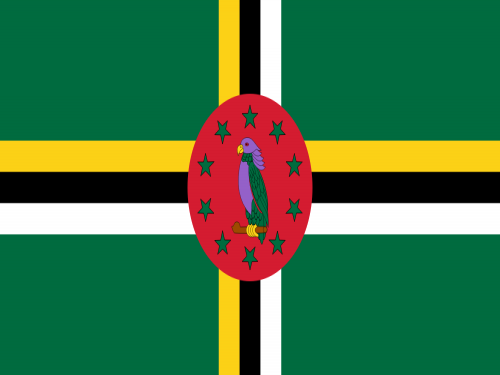
Discover Dominica
Currency
East Caribbean Dollar
Capital
Roseau
Languages Spoken
English
Fun Foods
Callaloo, Fresh Fish, Bakes, Plantains, Breadfruit, Cassava Bread, Tropical Fruit
High in the mountains of Dominica is a lake that boils. Its gray-blue water bubbles and churns like a giant pot on a stove, with steam rising off the top.
It's called the Boiling Lake, and it's the second-largest boiling lake in the world. To reach it, hikers walk for hours through rainforest and a steaming valley before the bubbling water finally comes into view.
The lake boils because Dominica is one of the most volcanic islands on Earth, with nine volcanoes packed into a small space.
All that underground heat also feeds hot springs, and rain pouring off the peaks fills so many streams that locals say the island has 365 rivers, one for every day of the year.
Long before Europeans came, Dominica belonged to the Kalinago people, who called it Waitukubuli, meaning "tall is her body." When Christopher Columbus sailed past on a Sunday in 1493, he renamed it Dominica, the Latin word for Sunday.
Dominica's steep, jungle-covered mountains made it easy to defend. Thanks to fierce Kalinago resistance, it became the very last Caribbean island Europeans managed to take over.
Even today, around 3,000 Kalinago still live on the island, the largest group of native islanders left in the eastern Caribbean.
Eventually, Britain and France battled over Dominica, and Britain won control in 1763. Like elsewhere in the Caribbean, enslaved Africans were forced to work the land. Dominica finally became an independent country in 1978.
The island still faces big challenges from nature. In 2017, a monster storm called Hurricane Maria slammed into Dominica, flattening homes and stripping the leaves off the entire rainforest.
The country is still rebuilding, but the forest has bounced back, green and loud with birdsong.
One of the most amazing things to do here happens out at sea. Dominica is one of the only places on Earth where sperm whales, the largest animals with teeth, live all year round. In 2023, the country created the world's first reserve just to protect them.
On land, you can splash beneath Trafalgar Falls or learn about Kalinago life in their territory.
For food, the national dish is callaloo, a creamy green soup made from leafy vegetables, served with fresh fish, plantains, and breadfruit.
Dominica's old national dish was even stranger: a big frog nicknamed the "mountain chicken," now protected because it nearly disappeared.
Experience Points


EARN UP TO
1,250 XP
in Dominica — collect the sticker and the trading card.
Start your travel passportPoints Available
| Sticker | 1,000 XP |
| Trading Card | 250 XP |
| Total | 1,250 XP |