

Guinea-Bissau

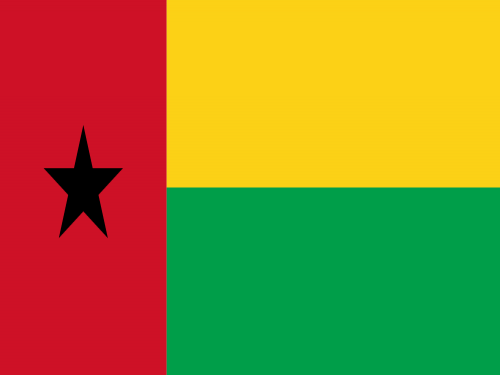
Discover Guinea-Bissau
Currency
Portuguese
Capital
Bissau
Languages Spoken
West African CFA Franc
Fun Foods
Caldo de Mancarra, Cafriela de Frango, Jollof Rice, Grilled Fish, Caldo de Tchebem, Cashews
On the island of Orango, off the coast of Guinea-Bissau, it’s the women who traditionally propose marriage. A woman offers the man she has chosen a special dish of fish cooked in red palm oil.
If he eats it, the answer is yes. Turning it down is considered a great dishonor.
Orango is part of the Bijagós Islands, a chain of about 88 islands where women have long held a leading role, running homes, money, and many community decisions. Only about 20 of the islands have people living on them all year.
The islands have another surprise: saltwater hippos. Most hippos live in rivers and lakes, but these swim in the sea, crossing channels between islands.
Sometimes they even sneak onto farms to munch the rice.
Guinea-Bissau’s mainland has a harder history. Portuguese sailors arrived in the 1440s, and towns like Cacheu became ports where enslaved Africans were bought and shipped across the Atlantic.
Today, Cacheu has a museum where visitors can learn about that history and remember the people taken.
Later, Portugal ruled the land as a colony. In 1963, a movement led by Amílcar Cabral began a long war for independence.
Cabral was killed in 1973, just months before Guinea-Bissau declared itself free. Portugal recognized its independence in 1974.
Since then, peace has often been hard to keep. The army has seized power many times, and a short civil war broke out in 1998.
In November 2025, soldiers took over again after a disputed election, and a military-led government now runs the country.
Most families here depend on one crop: cashew nuts. They make up almost all of what the country sells to the world.
For adventures, take a boat out to the Bijagós, a UNESCO World Heritage Site since 2025. On Orango, guides lead walks to look for the rare saltwater hippos, and on other islands, green sea turtles crawl up the beaches to lay their eggs.
For food, try caldo de mancarra, the national dish, a chicken stew in creamy peanut sauce served with rice. Cafriela de frango is grilled chicken soaked in lemon, onion, and garlic.
And snack on cashews, fresh from the trees that cover the countryside.
Sources: Wikipedia: Bijagós Islands, Wikipedia: Cacheu, and International IDEA: Guinea-Bissau Democracy Tracker.
Experience Points


EARN UP TO
1,500 XP
in Guinea-Bissau — collect the sticker and the trading card.
Start your travel passportPoints Available
| Sticker | 1,250 XP |
| Trading Card | 250 XP |
| Total | 1,500 XP |