

Kiribati
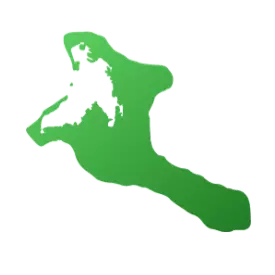
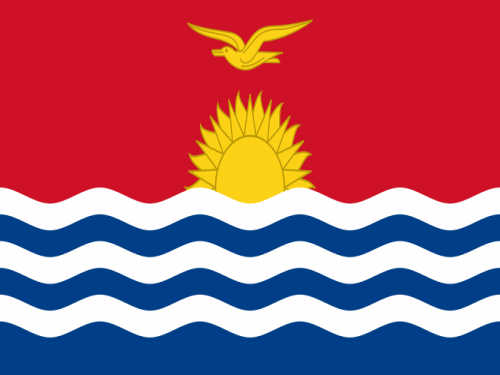
Discover Kiribati
Currency
Australian Dollar, Kiribati dollar
Capital
Tarawa
Languages Spoken
English
Fun Foods
Te Babai (Taro), Fish, Coconut, Breadfruit, Te Roro (Pandanus Wafer), Te Karewe (Coconut Sap Drink)
Every day on Earth starts first in Kiribati. Its easternmost islands sit in the world’s farthest-forward time zone, so every new date, and every New Year, arrives there first.
It wasn’t always that way. The International Date Line used to slice the country in half, so different islands were on different days.
In 1995, Kiribati moved the line around its islands so the whole nation could share the same date.
Kiribati, pronounced “KEER-ee-bahss,” is spread wide across the Pacific.
Its 33 islands sit in three groups, and it’s the only country with land in all four hemispheres: north, south, east, and west.
People from Micronesia have lived on these islands for about 3,000 years. In 1892, Britain took control of the islands, then known as the Gilbert Islands.
In 1900, a company began mining phosphate, a mineral used in fertilizer, on the island of Banaba.
Mining stripped Banaba so badly that its people could no longer live there. By 1945, they had been moved to an island in Fiji.
During World War II, Japan seized Tarawa. In November 1943, American Marines stormed the tiny island of Betio.
More than 1,000 Marines and about 4,700 Japanese defenders died in just a few days.
Kiribati became independent on July 12, 1979. The ocean that surrounds Kiribati is also its biggest threat.
Most of its land sits less than 2 meters (6.5 feet) above the sea, and rising water already floods homes and spoils drinking water.
In 2014, Kiribati bought land in Fiji as a backup plan.
Visit a maneaba, the meeting house where villages gather for weddings and town meetings.
Come in July for National Day, when Tarawa celebrates for nearly a week with traditional sailing canoe races and dance competitions.
The canoes, called te wa, are built without a single nail, held together with string twisted from coconut husks.
For food, try te babai, a taro root, with fresh fish and coconut.
Sources: Wikipedia: Geography of Kiribati, Visit Kiribati: Te Wa, and US Naval History and Heritage Command: Tarawa.
Experience Points


EARN UP TO
1,200 XP
in Kiribati — collect the sticker and the trading card.
Start your travel passportPoints Available
| Sticker | 1,000 XP |
| Trading Card | 200 XP |
| Total | 1,200 XP |