

Nauru

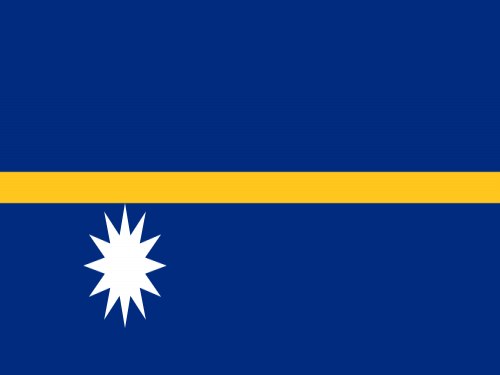
Discover Nauru
Currency
Australian Dollar
Capital
Yaren
Languages Spoken
Nauruan and English
Long before the Western world's gaze turned to this remote atoll, it was inhabited by Micronesian and Polynesian peoples. The island's isolation preserved its unique customs and languages.
In the late 18th century, Nauru was discovered by European navigators, including British and German explorers. The Germans took control in the late 19th century, and Nauru became part of German New Guinea. Following World War I, the League of Nations granted Australia, New Zealand, and the United Kingdom joint control over Nauru under a League of Nations mandate.
During the 20th century, the island played a pivotal role in global conflicts, as it was occupied by the Japanese during World War II. After the war, Nauru fell under United Nations trusteeship, administered by Australia, New Zealand, and the United Kingdom.
In 1968, Nauru gained independence, becoming one of the world's smallest republics. The discovery of phosphate deposits on the island had provided considerable wealth, but by the end of the 20th century, the resources were depleted.
Today, Nauru stands as one of the world's smallest nations, known for its distinctive culture and the legacy of phosphate mining. Its history, shaped by isolation and the exploitation of a valuable resource, is a unique chapter in the history of the Pacific.
Source ChatGPT
Experience Points

Points Available
| Sticker | 1,250 XP |
| Trading Card | 250 XP |
| Total | 1,500 XP |