

Togo
Discover Togo
Currency
West African CFA Franc
Capital
Lomé
Languages Spoken
French
Fun Foods
Fufu, Ablo, Pâte with Gboma Sauce, Akoumé, Koliko, Grilled Tilapia
In the hills of northern Togo, families live in houses that look like tiny mud castles.
The Batammariba people, whose name means “those who shape the earth,” build tall tower-houses called takienta by hand, from earth, wood, and straw.
Each house is built like a body. The doorway is its mouth, and the small windows are its eyes. Grain is stored up high, safe from animals and floods.
These houses are so striking that they’ve become a symbol of the whole country. The region, called Koutammakou, has been a UNESCO World Heritage Site since 2004.
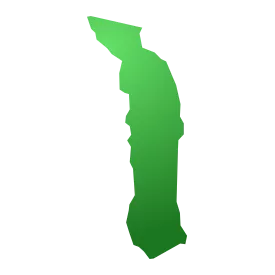
Togo itself is a long, skinny country, about 600 kilometers (370 miles) from north to south but only around 100 kilometers (60 miles) wide.
In 1884, Germany claimed it as a colony called Togoland. During World War I, British and French troops invaded and split Togoland in two.
In 1957, the British part voted to join the new country of Ghana. The French part became the independent Togolese Republic on April 27, 1960, led by President Sylvanus Olympio.
Togo’s early years were rough. Olympio banned opposition parties, and on January 13, 1963, soldiers killed him in one of Africa’s first coups after independence.
In 1967, an army officer named Gnassingbé Eyadéma took power and ruled for 38 years, longer than any other leader in modern African history at the time of his death.
When Eyadéma died in 2005, the army installed his son, Faure Gnassingbé, and he was later elected president.
In 2024, Togo rewrote its constitution and created a new top job with no term limit, and in May 2025, Faure Gnassingbé took it.
Supporters say the change creates a parliamentary system, while critics and protesters say it lets one family keep power indefinitely. The Gnassingbé family has now led Togo for more than 55 years.
For adventures, travel north to Koutammakou to see the takienta tower-houses up close and meet the families who build them.
In the south, explore the green hills around Kpalimé, with waterfalls, forest trails, and fluttering butterflies. In the capital, Lomé, wander the busy Grand Marché, where traders sell bright, patterned cloth.
For food, try fufu, pounded yam or cassava shaped into soft balls and dipped in spicy peanut or palm-nut soup.
Grab ablo, small steamed cakes of fermented corn, often served with grilled fish or chicken.
Sources: UNESCO: Koutammakou, the Land of the Batammariba, Wikipedia: History of Togo, and International IDEA: Togo Promulgates Controversial New Constitution.
Experience Points


Points Available
| Sticker | 1,000 XP |
| Trading Card | 250 XP |
| Total | 1,250 XP |