

Aqueduct of Segovia Spain
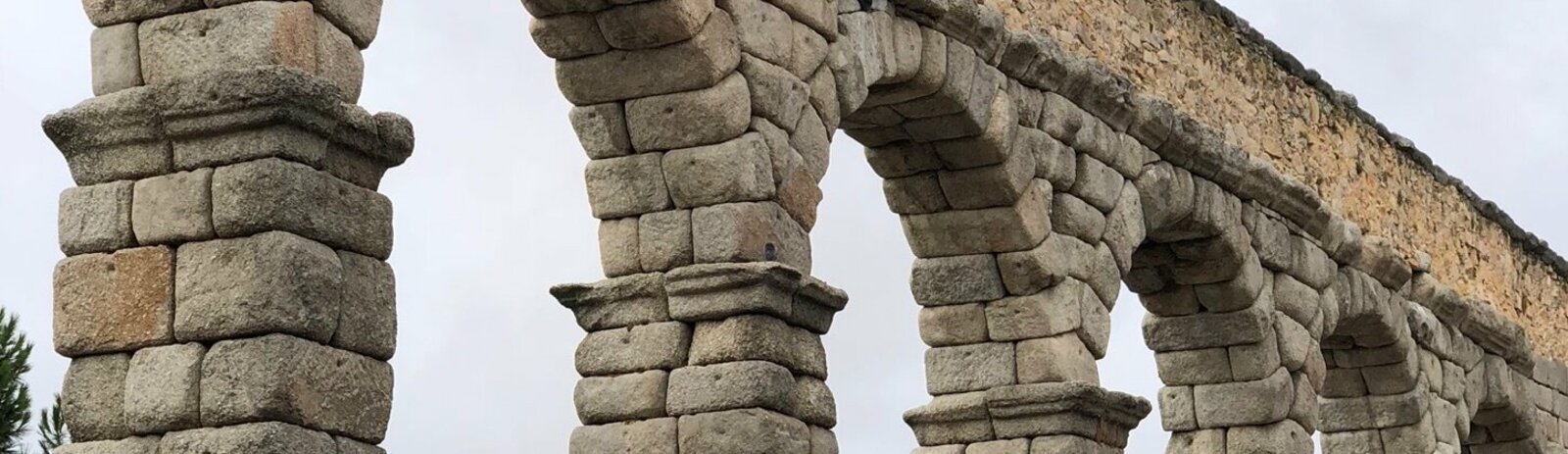

This well preserved Roman aqueduct dates back to the 1st century AD.
Photo by Eric Titcombe
Kid Rating:
The Aqueduct of Segovia is located in Segovia, Spain, and is one of the best preserved elevated Roman aqueducts still remaining in the world today. It is so important to the culture of Segovia that the aqueduct is featured on the city’s Coat of Arms.
Although it is hard to pinpoint the actual date of inscription for the aqueduct, or the date it was constructed, it is assumed that it was built sometime in the 1st century AD, when the Emperors Domitian, Nerva, and Trajan were rulers of Rome. The reason no one is able to date the aqueduct is because the original date inscription was located in the top portion that has now mostly crumbled with age. Each of the three tallest arches along the top of the aqueduct would have displayed large bronze letters to indicate the name of the builder and when it was constructed. Two of the original niches are still visible.
The original purpose of the Aqueduct of Segovia was to transport water from the Rio Frio into the city of Segovia. First the water was gathered in a tank known as the Big House, or El Caseron, and then it flowed towards a large water tower to be distributed through the city. Thirty-six semi-circular arches had to be rebuilt during the 15th century after being destroyed by the Moors in the 1000s. Amazingly, the granite blocks fit together so precisely that they did not require mortar to hold them together.
Why do people say the devil built the Aqueduct of Segovia?
Because of an old legend. The story goes that a young girl whose job was carrying water up Segovia's steep streets got so tired of it that she made a deal with the devil. If he could bring water all the way to her front door before sunrise, he could have her soul. The devil worked all night stacking stones. Just as the sky began to lighten, a rooster crowed, and he still had one single stone left to place. He lost the bet, and the girl kept her soul.
The townspeople sprinkled the aqueduct with holy water to wash off any leftover devil, then decided to keep it. People say the small holes in the stones are his hoofprints. The real answer is less spooky: Roman workers cut those holes so they could grip each block with iron claws and lift it into place.
There is a statue of the devil nearby on Calle San Juan. He is sitting with his unfinished last stone, taking a photo of the aqueduct.
How did the water get across the valley?
By falling, very slowly. The aqueduct has no pumps and no motors. Water simply runs downhill the entire way from the mountains, along a stone channel that drops just a tiny amount every step so the water never stops moving and never rushes.
The problem is that the ground is not flat. Right where the water needed to reach the old city, the land dips down into a valley. So instead of letting the channel dip too, the Romans built the ground up to meet it. That is what the famous arches are: a bridge that holds the water channel perfectly level while the earth falls away underneath. There are 167 arches in total, stacked in two rows, and at the deepest part of the valley the structure reaches about 28 metres from its buried foundations to the water channel on top.
How long did the Aqueduct of Segovia keep working?
Into the 1970s. The Romans finished it roughly 1,900 years ago, and it was still delivering water to Segovia within living memory of people alive today.
That means the aqueduct was doing its job while cars drove underneath it, while televisions played in the houses it supplied, and while astronauts walked on the moon. Most machines built today will not last fifty years. This one was built by hand, without cement or engines, and it outlasted the entire Roman Empire by about fifteen centuries.


EARN UP TO
1,200 XP
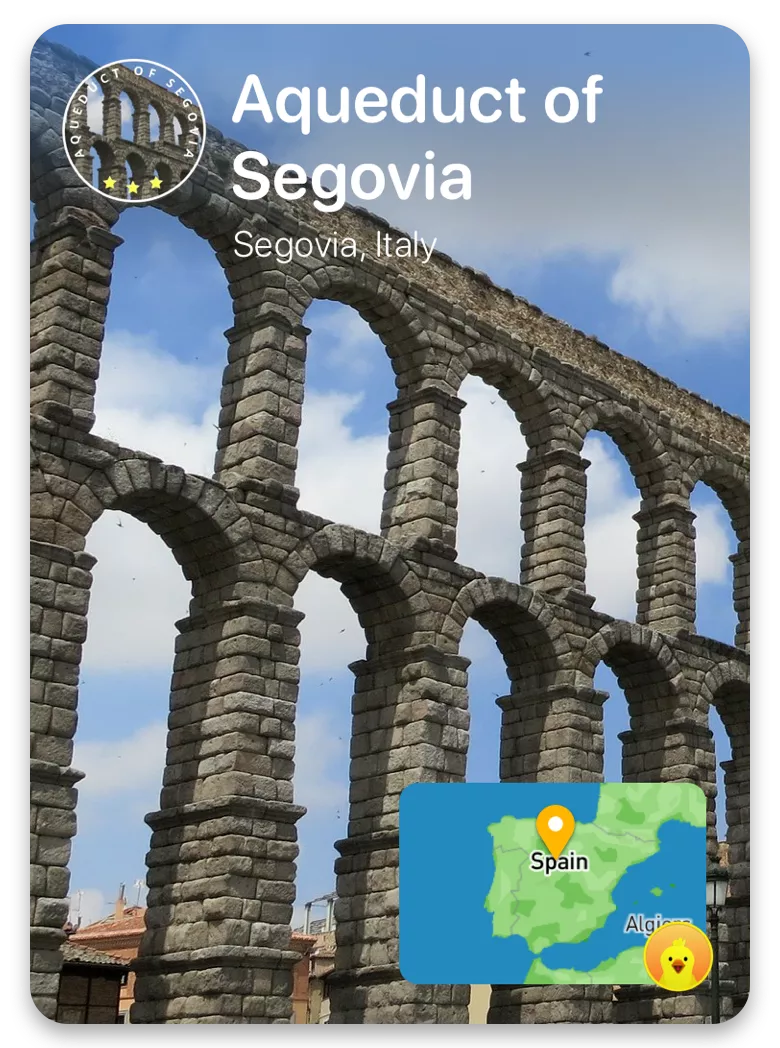
at Aqueduct of Segovia — collect the stamp, answer the trivia and finish the quests.
Start your travel passportPoints Available
| Stamp | 600 XP |
| Trivia Questions | 300 XP |
| Quests | 100 XP |
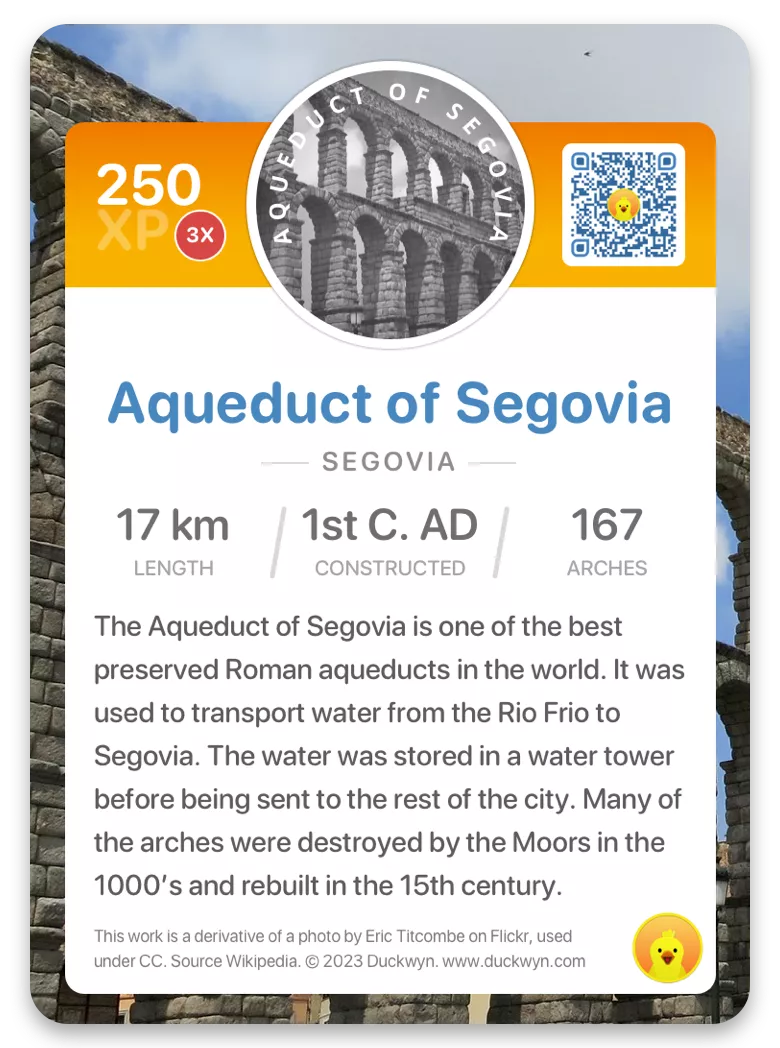
| Trading Card | 200 XP |
| Total | 1,200 XP |
Become Legendary
Complete these quests to earn your legendary status.

Find the devil statue on Calle San Juan.
Find the cross statue at the base of the aqueduct.
Climb the nearby stairs for an elevated view of the aqueduct.
Follow the aqueduct through Segovia to experience the size of this impressive structure.
Login to customize your picture from the Aqueduct of Segovia.

Exploring Segovia

Segovia
Its 1st century aqueduct and beautiful cathedral & castle make it a perfect day trip from Madrid.
Visit Segovia
