

Aspendos Theatre Turkey
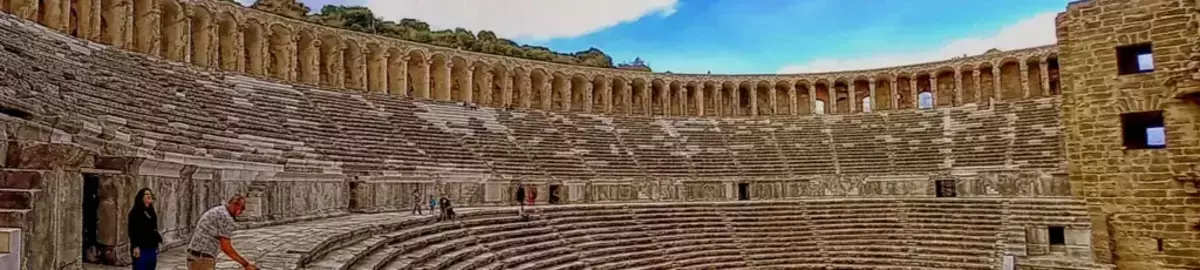
An ancient theatre with acoustics so perfect, legend says they won the architect a princess.
Photo by Mike Finn
Drop a coin on the stage and someone sitting in the back row, 96 meters away, can hear it land. The acoustics at Aspendos Theatre are that good.
Nearly 2,000 years after construction, this Roman theatre in southern Turkey remains one of the best-preserved ancient theatres on Earth.
The Greek architect Zenon built it between 161 and 180 AD during the reign of Emperor Marcus Aurelius. Two wealthy brothers funded the entire project, and inscriptions on the walls still credit them by name. Zenon was a local, born right here in Aspendos, and he designed a theatre that could seat up to 15,000 people.
Local legend tells a different story about why it was built. The king of Aspendos announced he would marry his daughter to whoever created the most useful structure for the city. Two brothers competed: one built an aqueduct, the other built this theatre.
The king favored the aqueduct at first. But when he visited the theatre and stood at the highest seats, he heard the architect whisper from the stage: "You should give your daughter to me." The acoustics won the princess.
The theatre survived because people kept using it. The Seljuk Turks converted the stage building into a palace in the 13th century and used the rest as a roadside inn for merchants. They added decorative zigzag paintings in red, still visible today, and their repairs kept the structure standing.
British archaeologist David George Hogarth visited in 1909 and wrote: "You may have seen the amphitheatres in Italy, France, Dalmatia and Africa... But you have not seen the theatre of Aspendos." Mustafa Kemal Atatürk came in the 1930s and ordered a full restoration so the theatre could host performances again.
Climb to the top of the 41 rows of stone seats for views over the Taurus Mountains. Check the summer schedule for the Aspendos International Opera and Ballet Festival, which still fills these ancient seats with music.
Walk the covered gallery that runs along the top of the theatre, one of the best-preserved examples anywhere. Then explore the hilltop ruins above: the old agora, a massive basilica, and the remains of the aqueduct that lost to this theatre in the contest for a princess.


EARN UP TO
1,300 XP
at Aspendos Theatre — collect the stamp, answer the trivia and finish the quests.
Start your travel passportPoints Available
| Stamp | 800 XP |
| Trivia Questions | 300 XP |
| Trading Card | 200 XP |
| Total | 1,300 XP |
Login to customize your picture from Aspendos Theatre.

Exploring Turkey