

Castel Sant'Angelo Italy
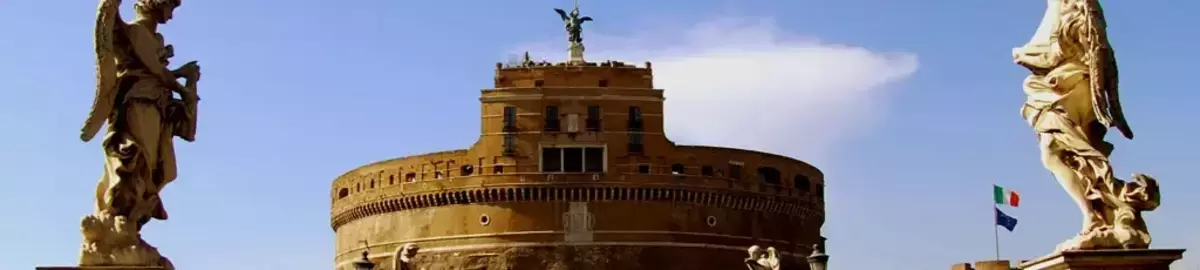
A Roman emperor's tomb named for the archangel who appeared to end a devastating plague.
Photo by Henning Klokkeråsen
In 537 AD, Roman soldiers ran out of ammunition while defending this fortress against attacking Goths. Their solution? They ripped the decorative marble statues off the walls and hurled them at the enemy.
Welcome to Castel Sant'Angelo, where even the art fights back.
The building started life as something far more peaceful. Emperor Hadrian commissioned it in 134 AD as a massive tomb for himself and his family. Picture a cylinder the size of a city block, covered in gleaming white marble, topped with gardens and a bronze chariot carrying a statue of the emperor himself.
Hadrian died before it was finished. His successor Antoninus Pius completed it in 139 AD and placed the emperor's ashes inside. For the next 80 years, Rome's rulers joined him: Marcus Aurelius, Commodus, Septimius Severus, and the notoriously brutal Caracalla all ended up here.
Then Rome fell, and the tomb became a fortress. In 590 AD, a terrible plague was killing thousands across the city. Pope Gregory the Great led a procession through the streets, praying for it to end.
As he passed the old tomb, he looked up and saw the Archangel Michael standing on top, sheathing his sword. The plague stopped. The building got a new name: Castle of the Holy Angel.
Popes turned it into their emergency bunker. Pope Nicholas III built a secret elevated corridor called the Passetto di Borgo, connecting the castle directly to the Vatican.
It saved Pope Clement VII's life in 1527 when German troops sacked Rome. He sprinted down the passageway while nearly the entire Swiss Guard died buying him time.
The castle also served as a prison. The philosopher Giordano Bruno spent six years locked in its cells before being burned at the stake for heresy.
The sculptor Benvenuto Cellini did time here too. And in Puccini's opera Tosca, the heroine throws herself from these very ramparts in the dramatic finale.
Climb to the terrace for one of Rome's best views, with St. Peter's dome filling the horizon. Walk through the spiral ramp that Hadrian's funeral procession once used.
Find the papal apartments with Renaissance frescoes by Pinturicchio. Then cross the Ponte Sant'Angelo, lined with Bernini's angels, as the sun sets behind the Vatican.


EARN UP TO
900 XP
at Castel Sant'Angelo — collect the stamp, answer the trivia and finish the quests.
Start your travel passportPoints Available
| Stamp | 400 XP |
| Trivia Questions | 300 XP |
| Trading Card | 200 XP |
| Total | 900 XP |
Login to customize your picture from Castel Sant'Angelo.

Exploring Rome

Rome
Home to over 900 churches and 280 fountains, this historic capital city should not be missed.
Visit Rome