
Freedmen’s Colony United States

An island colony of African Americans living as freedmen and civilians after the Civil War.
Photo by Ken Lund
Roanoke Island has two lost colonies. The famous one vanished in the 1580s and fills history books.
The second one existed within living memory of people's great-great-grandparents, held thousands of residents, and almost nothing of it survives above ground today.
Union forces captured Roanoke Island in February 1862, during the Civil War. Enslaved people from the surrounding region began walking, rowing, and sailing to the island to reach them.
The Union Army had a policy for this. Rather than return people to those who had enslaved them, officers classified them as "contraband," a legal term that meant captured property of war.
It was an awkward label, but it worked. It meant the Army would not send anyone back.
The camp grew fast. Within the first month, the new arrivals had built two churches and a school.
In 1863, the government made it official and created the Roanoke Island Freedmen's Colony. It was one of roughly 100 contraband camps across the South by the war's end, but this one was meant to be different.
An army chaplain named Horace James was put in charge. He laid out streets, assigned plots of land to families, and set up a sawmill and fisheries so people could earn wages.
Teachers came south to help, most of them women. About 27 taught here over the years, and both children and adults crowded in to learn to read.
By January 1864, more than 2,700 Black residents lived on the island. Over 100 men from the colony volunteered to fight for the Union.
Then conditions got hard. The island was overcrowded, the soil was too poor to grow enough food, and disease spread quickly.
The end came in 1865. President Andrew Johnson issued an Amnesty Proclamation ordering that land taken during the war be returned to its former Confederate owners.
Most of the colony's land was included. Families who had built homes, schools, and churches were told to leave.
Most moved to the mainland to look for work. By 1870, only about 300 remained, and some of their descendants still live on the island today.
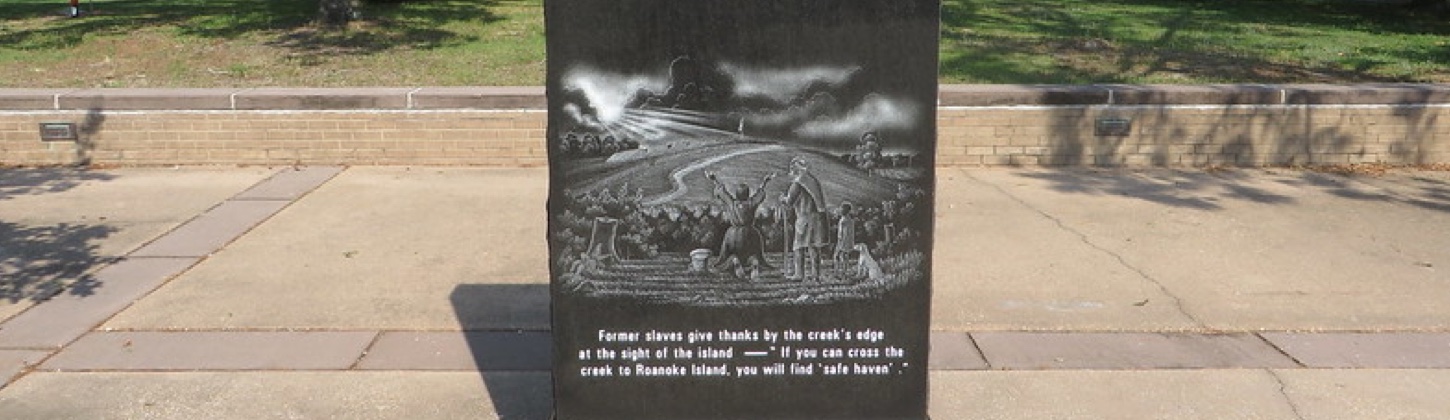
Visit Fort Raleigh National Historic Site, where a marble monument placed in 2001 honors the colony. Walk the grounds where thousands of people once built streets, schools, and churches from nothing. Look for the small road sign nearby that still reads Freedmen's Colony Road.


EARN UP TO
900 XP
at Freedmen’s Colony — collect the stamp, answer the trivia and finish the quests.
Start your travel passportPoints Available
| Stamp | 450 XP |
| Trivia Questions | 300 XP |
| Trading Card | 150 XP |
| Total | 900 XP |
Login to customize your picture from Freedmen’s Colony.

Exploring North Carolina