
George Washington Carver National Monument United States
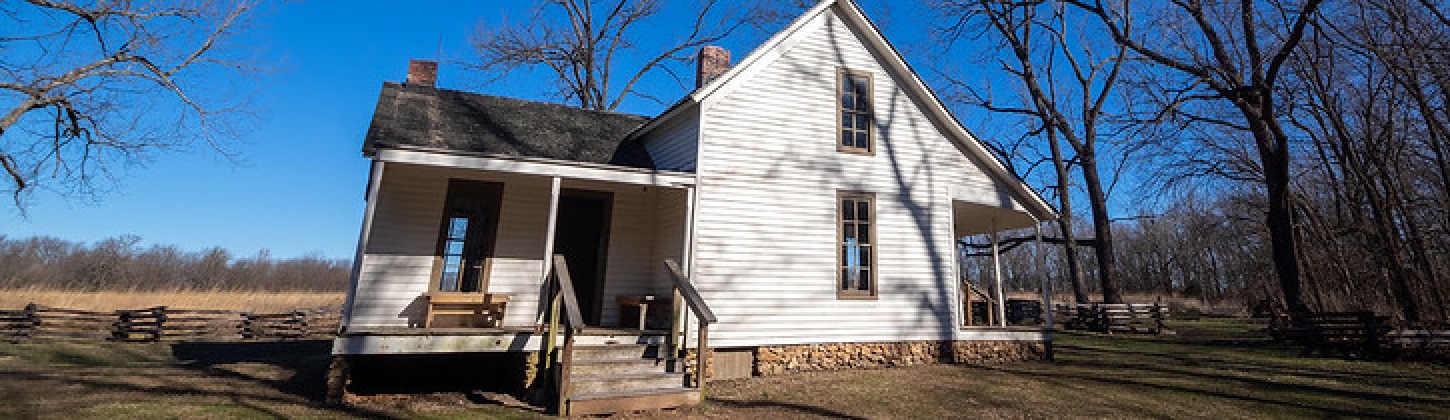

Visit the home of the most prominent African American scientist of the early 20th century.
Photo by Matthew Dillon
George Washington Carver went to college to study art. He wanted to be a painter, and he was good at it.
A teacher noticed that his paintings of flowers were unusually accurate. She told him he should study plants instead, and that suggestion changed farming across the American South.
Carver was born on this farm in Diamond, Missouri, in the early 1860s. He was born into slavery, and nobody recorded his exact birthday.
His start in life was hard. As a baby, he and his mother were kidnapped by raiders and taken away. George was found in Arkansas, very sick, and brought back. His mother was never found.
He was a frail child, so he wasn't sent to work in the fields. He spent his time outdoors instead, learning how plants grew.
Getting an education was difficult. Schools nearby refused to admit Black students, so he traveled through Missouri and Kansas to find one that would.
He eventually became the first African American student at Iowa State Agricultural College. He earned a master's degree there in 1896.
That same year, the educator Booker T. Washington invited him to lead the farming department at Tuskegee Institute in Alabama. Carver stayed for 47 years.
He found a serious problem. Farmers in the South planted cotton year after year, and cotton strips a nutrient called nitrogen out of the soil.
The land wore out, and poor farmers grew poorer. Carver's solution was to alternate cotton with plants that put nitrogen back in.
The best of those crops was the peanut. Peanuts fed families, fed livestock, restored the soil, and could be sold.
Farmers had a fair question, though: what do you do with all these peanuts? So Carver spent years developing hundreds of uses for them, along with sweet potatoes and soybeans.
He even built a rolling classroom on a wagon and drove it out to farms so people who couldn't travel could still learn.
Carver became one of the most famous scientists in the country. In 1941, Time magazine nicknamed him the "Black Leonardo," comparing him to Leonardo da Vinci.
He died in January 1943. Six months later, this farm became the first national monument in the United States honoring a Black American.
Walk the Carver Trail through the woods and prairie where he first studied plants as a boy. Look for the Boy Carver statue, showing him as a curious child among the trees. Visit the museum and science lab, where kids can try hands-on experiments of their own.


EARN UP TO
1,100 XP
at George Washington Carver National Monument — collect the stamp, answer the trivia and finish the quests.
Start your travel passportPoints Available
| Stamp | 600 XP |
| Trivia Questions | 300 XP |
| Trading Card | 200 XP |
| Total | 1,100 XP |
Login to customize your picture from George Washington Carver National Monument.

Exploring Missouri