
Pompeii Italy
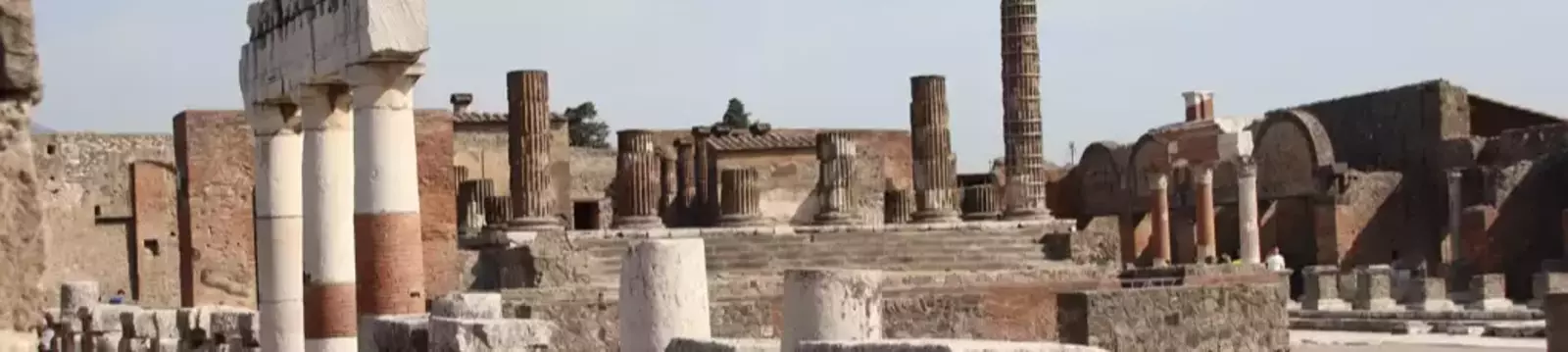

Buried under ash when Mount Vesuvius erupted, the city wasn't discovered again until 1748.
Photo by Gary Todd
In 1863, an archaeologist named Giuseppe Fiorelli noticed strange hollow spaces in the hardened ash at Pompeii. He guessed what they were and told his workers to pour liquid plaster inside.
When the plaster set and the ash was chipped away, they had the shapes of four people who had died there almost 1,800 years earlier. You could see the folds of their clothes.
Pompeii was a Roman city of about 11,000 people on the Bay of Naples in Italy. In 79 AD, Mount Vesuvius erupted a few miles away.
Ash and small stones rained down for hours, piling up on rooftops until buildings collapsed. Then clouds of hot gas and ash raced down the mountain and swept through the streets.
The city vanished under 4 to 6 meters of ash. A Roman writer named Pliny the Younger watched from across the bay and described the cloud rising like a giant pine tree.
The ash did something unusual. It sealed the city so completely that bread, furniture, paintings, and even graffiti on the walls survived underground.
Pompeii stayed buried for nearly 1,700 years. Serious digging began in 1748, and at first it was a treasure hunt, with workers pulling out statues and cutting frescoes off the walls.
Fiorelli changed that when he took charge in 1860. He mapped the city into numbered blocks, dug carefully street by street, and invented the plaster casts.
His method worked because the bodies had rotted away inside the hardened ash, leaving perfect molds. The plaster filled the empty space, so each cast holds the person's real bones inside it.
About 104 casts have been made. They show people crouching, covering their faces, and holding each other.
Walk the stone streets and look for the deep ruts worn by cart wheels and the stepping stones that let people cross without getting their feet wet. Visit the House of the Faun and the Villa of the Mysteries for the best surviving wall paintings. Stop at the Garden of the Fugitives, where casts of 13 people lie where they were found, and look up at Vesuvius standing quietly behind them.


EARN UP TO
1,300 XP
at Pompeii — collect the stamp, answer the trivia and finish the quests.
Start your travel passportPoints Available
| Stamp | 750 XP |
| Trivia Questions | 300 XP |
| Trading Card | 250 XP |
| Total | 1,300 XP |
Login to customize your picture from Pompeii.

Exploring Italy