

The Reichstag Germany
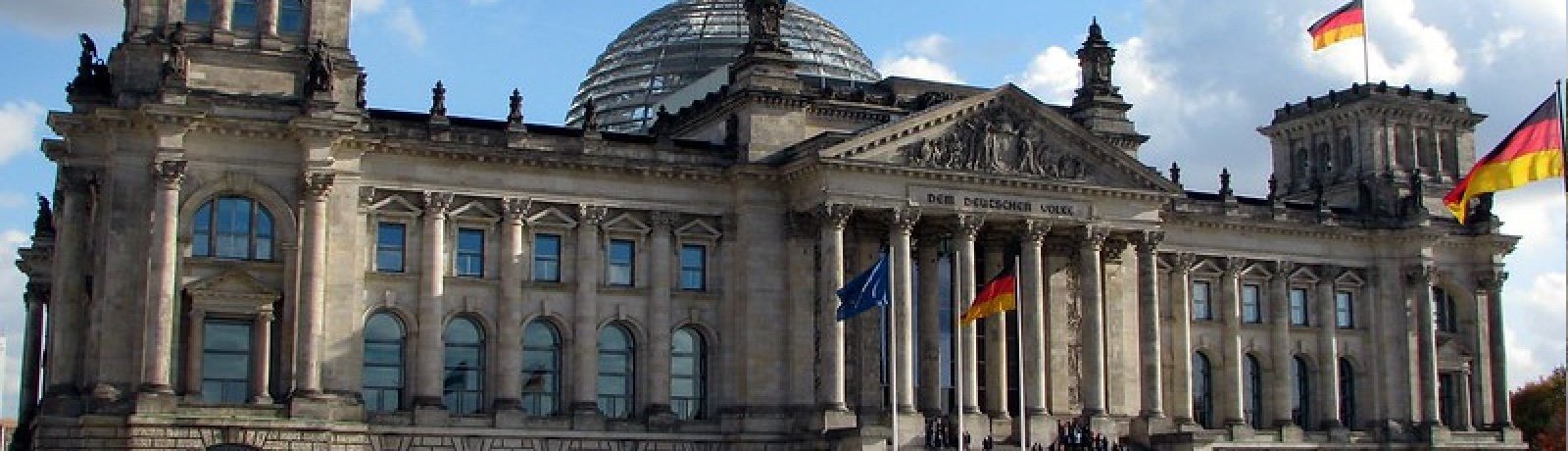

The Reichstag arson fire helped Hitler and the Nazi party become the dominant party in Germany.
Photo by Leszek Kozlowski
The glass dome on top of this building has a ramp that spirals all the way up inside it. From the top, visitors can look straight down through the glass into the room where Germany's lawmakers meet.
That's the point. The architect wanted ordinary people to be able to look down on their government and see what it was doing.
The Reichstag opened in 1894 in Berlin as the home of the German Empire's parliament. The architect Paul Wallot gave it four corner towers and a dome of iron and glass that was a marvel of engineering at the time.
On the night of February 27, 1933, the building caught fire. Adolf Hitler had become Germany's leader just one month earlier.
Police found a young Dutch man named Marinus van der Lubbe inside. He was arrested, put on trial, and executed.
Historians still argue about whether he acted alone. But the Nazis didn't wait for answers. They blamed the Communists right away.
The very next day, the government passed an emergency law that took away basic rights, like freedom of speech and the right to a fair trial. Thousands of Hitler's opponents were rounded up.
The fire became one of the key steps in the Nazis taking total control of Germany. The building itself was left damaged and barely used.
At the end of World War II in 1945, Soviet troops captured the Reichstag. Soldiers scrawled their names and messages all over the walls.
After the war, Berlin was split in two. The Reichstag stood in West Berlin, just steps from the Berlin Wall.
The wall came down in 1989, and Germany became one country again in 1990. The official reunification ceremony took place right in front of the Reichstag.
In 1995, two artists named Christo and Jeanne-Claude wrapped the entire building in silver fabric. About five million people came to see it in just two weeks.
Then the British architect Norman Foster rebuilt the inside. His first plans didn't even include a dome; the German government insisted on one.
Germany's parliament, the Bundestag, moved back into the building in 1999. Foster kept some of the Soviet soldiers' graffiti on the walls as a reminder of what happened here.
Walk up the spiral ramp inside the glass dome and look down at the lawmakers' chamber below. At the top, take in the view across Berlin to the Brandenburg Gate. Look for the graffiti left by Soviet soldiers in 1945, still preserved inside the building.
Sources: Britannica, U.S. Holocaust Memorial Museum, and Wikipedia.


EARN UP TO
1,050 XP
Collect the stamp, answer the trivia and finish the quests at The Reichstag.
Start your travel passportPoints Available
| Stamp | 500 XP |
| Trivia Questions | 300 XP |
| Trading Card | 250 XP |
| Total | 1,050 XP |
Login to customize your picture from The Reichstag.

Exploring Berlin


