

Palau
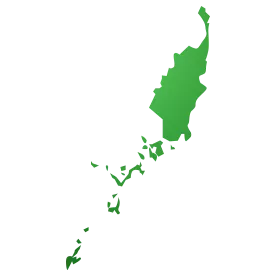

Discover Palau
Currency
US Dollar
Capital
Ngerulmud
Languages Spoken
Palauan and English
Fun Foods
Broiled Fish in Banana Leaf, Taro Rösti, Demok, Coconut Crab, Fruit Bat Soup, Tapioca Mochi
When you land in Palau, you can’t just get a passport stamp. You have to sign a promise.
Since December 7, 2017, every visitor has signed the Palau Pledge, stamped right into their passport, promising the children of Palau to protect their island home.
Palauan schoolkids from all 16 of the country’s states helped write the pledge. Palau became the first country on Earth to change its entry rules to protect nature.
Break the promise by harming the reefs or wildlife, and you could face a huge fine.
Palau is a group of about 300 islands in the western Pacific, home to only about 20,000 people. It’s also full of world firsts.
In 2009, it created the world’s first shark sanctuary, and in 2015 it protected 80% of its ocean waters from commercial fishing.
Long before tourists, Palauans traded with neighboring islands. People from Yap, about 450 kilometers (280 miles) away, paddled to Palau to carve giant stone discs from its rocks, then hauled them home to use as money.
Some broken ones still sit in Palau’s Rock Islands today.
In the 1800s, Spain claimed the islands, then sold them to Germany in 1899. After World War I, Japan took control.
During World War II, the islands became a battlefield. In 1944, United States forces invaded the island of Peleliu, and more than 2,000 Americans and 10,000 Japanese soldiers died in the fighting.
Rusted tanks and planes still lie in the jungle and on the seafloor.
After the war, the United States ran Palau. In 1981, Palauans wrote a constitution that banned nuclear weapons, which clashed with American military plans.
It took eight votes before Palau and the United States reached a deal. Palau finally became independent on October 1, 1994.
For adventures, explore the Rock Islands, a UNESCO World Heritage Site where hundreds of green, mushroom-shaped islands rise out of turquoise water.
When conditions are right, you can snorkel in Jellyfish Lake among millions of golden jellyfish that have almost no sting.
Paddle a kayak past the stone money, snorkel with reef sharks, and spot giant clams bigger than a bathtub.
For food, try taro, a starchy root that Palauan women traditionally grow and harvest, and fresh fish wrapped in banana leaves and grilled.
Brave eaters can try coconut crab or Palau’s most famous delicacy, fruit bat soup, served whole in coconut broth.
Sources: World Economic Forum: Palau Requires Tourists to Sign an Eco-Pledge, CIA World Factbook: Palau, and Wikivoyage: Palau.
Experience Points


Points Available
| Sticker | 1,250 XP |
| Trading Card | 250 XP |
| Total | 1,500 XP |