
Arbeia Roman Fort United Kingdom
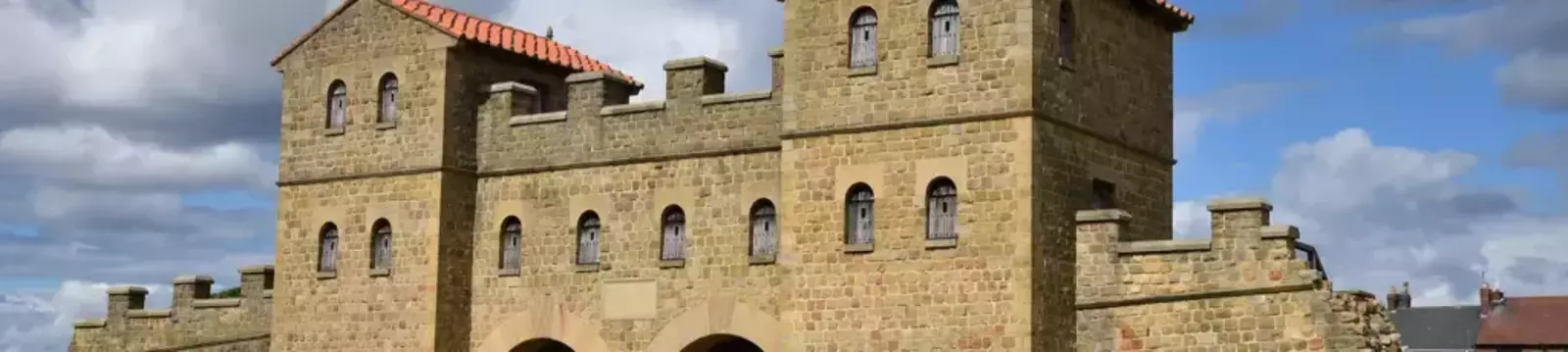

A Roman fort protecting Rome's northern border.
Photo by Carole Raddato
The name Arbeia likely means "place of the Arabs." That's because one of the fort's last Roman garrisons was a unit of specialist boatmen from the banks of the River Tigris in what is now Iraq.
They had traveled from the far eastern edge of the Roman Empire to serve at its far northwestern corner, on the windswept coast of northeast England.
Arbeia was built in 129 AD on a hilltop overlooking the mouth of the River Tyne in South Shields. It sat four miles beyond the eastern end of Hadrian's Wall, guarding the main sea route that supplied the entire wall and controlling a small port on the south bank of the Tyne.
It was more than just a fort. Over time Arbeia became the primary supply depot for all of Hadrian's Wall, storing food and goods for thousands of soldiers stationed across the entire frontier.
At its peak it held 24 granaries. A typical Roman fort had just two.
The garrison changed multiple times over the fort's nearly 300-year life. The first soldiers were cavalry from Pannonia, modern-day Hungary. They were followed by cavalry from the Astures tribe in northern Spain, then an infantry unit from Gaul. The final garrison, the Tigris boatmen from Mesopotamia, gave the fort its lasting name.
A gravestone found at the site captures the fort's remarkable mix of people. It was erected by Barates, a merchant from Palmyra in modern Syria, in memory of his wife Regina, a British woman from the Catuvellauni tribe in what is now Hertfordshire.
She had originally been his slave before he freed and married her. When she died aged 30, he carved a final word on the stone in his own language: "alas."
Walk through the reconstructed West Gate, which stands at full Roman height. Explore the recreated Commanding Officer's house, built in Mediterranean courtyard style with frescoed walls. The museum holds tombstones, altar stones, and artifacts that bring this corner of the empire to life.


EARN UP TO
1,050 XP
at Arbeia Roman Fort — collect the stamp, answer the trivia and finish the quests.
Start your travel passportPoints Available
| Stamp | 600 XP |
| Trivia Questions | 300 XP |
| Trading Card | 150 XP |
| Total | 1,050 XP |
Login to customize your picture from the Arbeia Roman Fort.

Exploring United Kingdom