
Canyonlands National Park United States
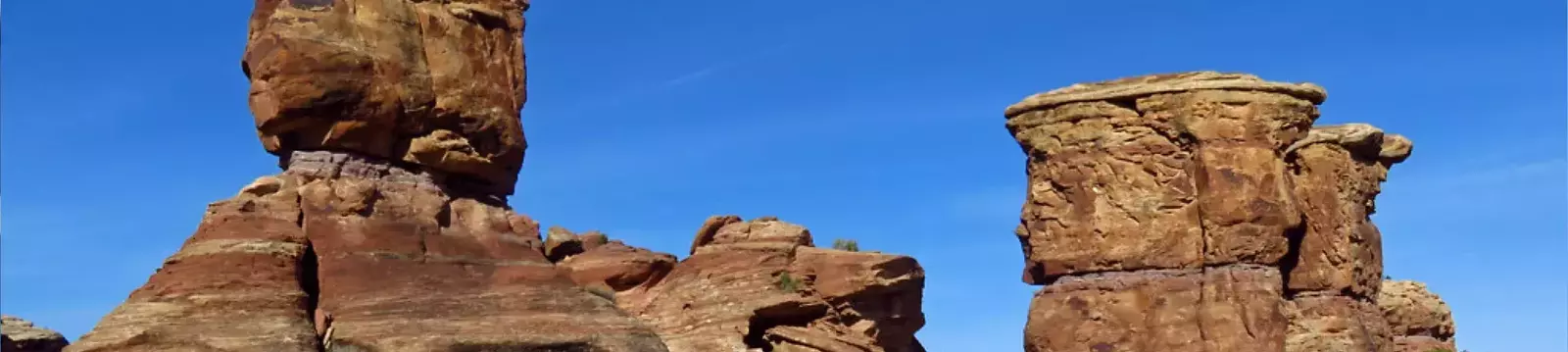
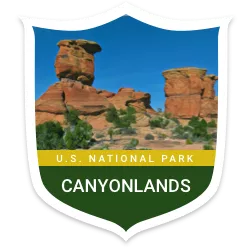
A magical place of mesas, canyons, and buttes carved by the Colorado and Green rivers.
Photo by Jeff Hollett
Kid Rating:
Canyonlands National Park doesn't have any roads connecting its different sections. To go from one part of the park to another, visitors actually have to leave the park entirely and drive back in from a different direction.
That's because two powerful rivers, the Green and the Colorado, cut the park into pieces. Where they meet, called the confluence, sits right at the heart of the park.
These rivers carved the landscape into four separate districts: Island in the Sky, The Needles, The Maze, and the rivers themselves. Each district looks and feels completely different from the others.
Island in the Sky sits high on a huge mesa, more than 1,000 feet above the surrounding canyons. It's the easiest district to reach, with a paved road, several overlooks, and short trails perfect for a quick visit.
The Needles gets its name from tall, colorful rock spires made of sandstone. Ancient peoples once lived here too, leaving behind ruins and rock art that visitors can still see today.
The Maze is the wildest and most remote part of the park. Reaching it takes serious effort, a rugged vehicle, long dirt roads, and real backcountry experience.
Canyonlands became a national park on September 12, 1964, protecting more than 337,000 acres of canyons, mesas, and towering rock formations.
Watch the sunrise at Mesa Arch, one of the most photographed spots in the entire park. Hike among the sandstone spires of The Needles district. Drive the scenic road through Island in the Sky for sweeping views of canyons carved by the Green and Colorado rivers.
Is Upheaval Dome a meteor crater?
Most geologists now think so. Upheaval Dome is a circular scar about 3 miles across in the Island in the Sky district, with a crumpled core of rock rising 750 feet from the floor. Nothing else nearby looks remotely like it.
For decades the leading explanation was salt. Deep underground sits a thick layer of salt, and salt can slowly push up through heavier rock, buckling everything above it. That would make the dome a blister rather than a crater, formed over millions of years.
Then geologists studying the rock in the 1990s argued for a meteorite strike instead. In 2008, two German scientists settled it for most people when they found shocked quartz in the rock. Shocked quartz only forms under pressure so sudden and violent that almost nothing in nature can make it.
The best guess now is that a meteorite hit here sometime in the last 170 million years, and what you are looking at is the worn-down stump of the crater.
Why can't you walk on the dirt in Canyonlands?
Because the dirt is alive. The dark, crusty, bumpy ground between the plants is called cryptobiotic soil, and it is not really soil. It is a living skin made of tiny organisms, mostly a kind of bacteria, tangled together with moss and lichen.
That crust is what makes the desert work. It grips the sand so the wind cannot carry it off, soaks up rain and holds onto it, and pulls nitrogen out of the air to feed the plants growing through it.
It also grows painfully slowly. One footprint can destroy decades of growth in a single second, and a badly crushed patch can take longer than a human lifetime to return.
This is why rangers ask visitors to stay on trails, on bare slickrock, or in dry sandy washes. The phrase they use is "Don't bust the crust."
Who painted the Great Gallery in Horseshoe Canyon?
Nobody knows. The Great Gallery is a painted rock wall about 200 feet long with roughly 20 human-shaped figures on it. Some stand over 7 feet tall. Many have no arms or legs, just long dark bodies and large staring eyes, so people call them ghosts.
The style is named after this canyon. Horseshoe Canyon was once called Barrier Canyon, and archaeologists still call the style Barrier Canyon Style.
The age is argued over. Estimates run from about 7,000 years ago to about 1,000 years ago. Rock paint is very hard to date, since there is rarely enough left to test.


EARN UP TO
1,750 XP
at Canyonlands National Park — collect the stamp, answer the trivia and finish the quests.
Start your travel passportPoints Available
| Stamp | 900 XP |
| Trivia Questions | 300 XP |
| Quests | 250 XP |
| Trading Card | 300 XP |
| Total | 1,750 XP |
Become Legendary
Complete these quests to earn your legendary status.

Take the 2WD Elephant Hill road out to see the Needles rock formations.
Enjoy a stunning sunset view from the nearby Dead Horse Point State Park.
Make the short walk to Grand View Point for a stunning view of the canyon.
Get a grand view of the canyon carved by the Green River at the Green River Overlook.
Cross the road from the Visitors Center to take in the great views from the nearby overlook.
Explore the Cave Spring Trail with its fun caves, historic cowboy camp, and prehistoric rock paintings.
Adventure along the 1.6-mile round trip trail out to the unique and colorful scenery of the Upheaval Dome.
Hike the 0.5-mile trail to see Mesa Arch, a large arch set on a cliff that extends down to Buck Canyon below.
Enjoy a 2-mile round trip hike along the Grand View Point Trail where you'll get 360 degree views of the canyon.
Peer down into the canyon at the switchback road heading off into the distance at the Schaffer Canyon Trail Overlook.
Login to customize your picture from Canyonlands National Park.

Exploring Utah