
Scott Monument United Kingdom
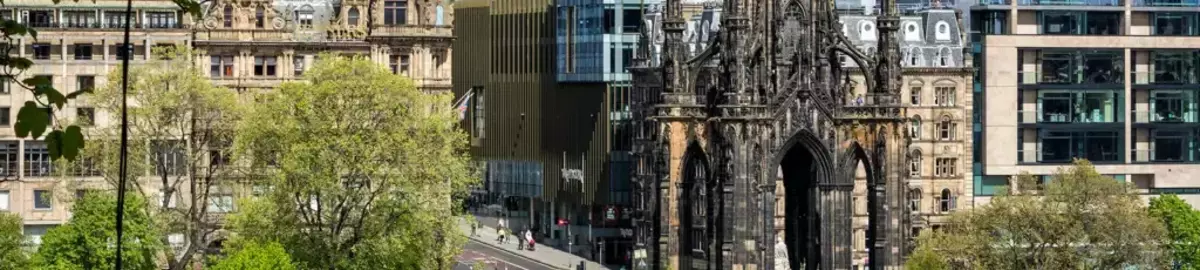
A 200-foot Gothic tower honoring Scotland's most famous novelist, Sir Walter Scott.
Photo by Gary Campbell-Hall
The man who designed Edinburgh's most recognizable landmark never saw it finished. George Meikle Kemp was a carpenter with no formal architecture training.
He entered the design competition under a fake name because he feared the judges would reject a working-class amateur. He won anyway.
The Scott Monument rises 61 meters (200 feet) above Princes Street Gardens, making it the second-largest monument to a writer anywhere in the world. Only José Martí's memorial in Havana stands taller. The Victorians built it to honor Sir Walter Scott, the novelist whose stories of Highland warriors and star-crossed clans shaped how the world sees Scotland.
Scott died in 1832, and Edinburgh immediately started raising money for a memorial. Fifty-four architects submitted designs. Kemp entered as "John Morvo," a name he'd spotted as medieval graffiti on Melrose Abbey.
The judges loved his Gothic rocket ship of a design but initially ranked him third because he wasn't a "real" architect. When they held a second round, Kemp improved his plans and won.
Construction began in 1840 using Binny sandstone from West Lothian. The work was deadly. The stone was so hard that the dust destroyed men's lungs. An estimated 23 of the 70 stonemasons died from silicosis during or shortly after the build.
Kemp himself never made it to the finish line. On a foggy night in March 1844, just weeks before completion, he fell into the Union Canal while walking home from the construction site and drowned. His son placed the final stone that August.
At the monument's center sits a white marble statue of Scott with his dog Maida, carved from a single 30-ton block of Italian Carrara marble. Surrounding him are 64 statues of characters from his novels, everyone from Ivanhoe to Rob Roy to Jeanie Deans.
Climb the 287 steps to the top for panoramic views across Edinburgh, from the castle to Arthur's Seat to the Firth of Forth. The staircase gets narrower and steeper as you go, so be ready for a workout.
Stop in the small museum room to learn about Scott's wild life, including the financial crash that nearly ruined him. Look closely at the stonework and you'll spot the difference between the original soot-blackened surface and the lighter patches where restorers replaced damaged sections.


EARN UP TO
900 XP
at Scott Monument — collect the stamp, answer the trivia and finish the quests.
Start your travel passportPoints Available
| Stamp | 450 XP |
| Trivia Questions | 300 XP |
| Trading Card | 150 XP |
| Total | 900 XP |
Login to customize your picture from the Scott Monument.

Exploring Edinburgh

Edinburgh
With 112 parks, the city has more trees per person than any other UK city.
Visit Edinburgh