

Samoa
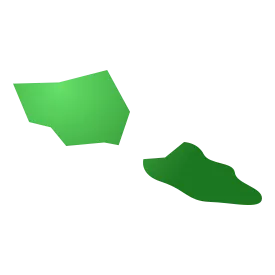
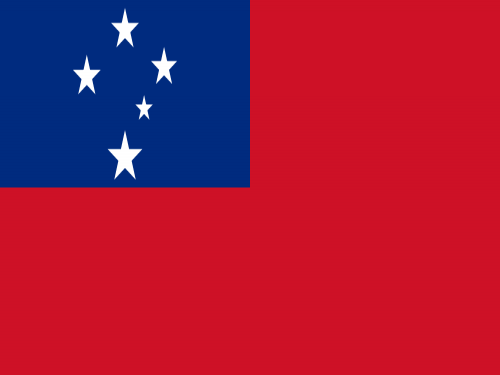
Discover Samoa
Currency
Tālā
Capital
Apia
Languages Spoken
Samoan and English
Fun Foods
Palusami, Taro, Umu-Roasted Pork, Oka, Panipopo, Koko Samoa, Niu
On the night of Thursday, December 29, 2011, people in Samoa went to bed as usual. When they woke up, it was Saturday, December 31.
Friday, December 30, never happened in Samoa at all.
The whole country had jumped across the International Date Line, the invisible line in the Pacific Ocean where one calendar day turns into the next.
Before the jump, Samoa was nearly a full day behind Australia and New Zealand, its biggest trading partners. When Samoans were working on Friday, it was already the weekend there.
Funny enough, Samoa had done the opposite back in 1892, when American traders persuaded it to line up with the United States instead.
People have lived on these islands for about 3,000 years. Early Samoans were expert sailors who traded with Fiji and Tonga.
Samoans are also famous for tatau, traditional tattoos tapped into the skin by hand. The English word “tattoo” comes from this Polynesian word.
Then outsiders took control. Germany ruled Samoa from 1900, and when World War I began in 1914, New Zealand took over.
In 1918, a ship from New Zealand brought the deadly Spanish flu to the islands. Nine out of every ten people got sick, and about one in five Samoans died.
Many Samoans joined the Mau, a peaceful movement for independence. On December 28, 1929, a day remembered as Black Saturday, New Zealand police fired into a peaceful Mau march and killed 11 people.
Samoans kept pushing. In 1962, Samoa became the first Pacific island nation to win its independence, and in 2002, New Zealand’s prime minister formally apologized for the injustices of its rule.
Samoa was also the final home of Robert Louis Stevenson, the author of Treasure Island. Samoans called him Tusitala, the “teller of tales.”
After he died in 1894, they carried him to the top of Mount Vaea, where you can hike to his grave today.
For adventures, climb down a long wooden ladder into To Sua Ocean Trench, a swimming hole 30 meters (100 feet) deep, filled with seawater through an underwater tunnel.
On the island of Savai’i, watch locals drop coconuts into the Alofaaga Blowholes, where crashing waves blast them high into the air. At the Saleaula Lava Fields, explore the ruins of a church half-buried by a volcanic eruption more than 100 years ago.
For food, the big Sunday feast is cooked in an umu, an oven of hot volcanic stones. Try palusami, creamy coconut wrapped in taro leaves and baked, and oka, fresh raw fish soaked in lemon juice and coconut milk.
Then drink niu, cool coconut water straight from the shell.
Sources: CIA World Factbook: Samoa, New Zealand Ministry of Foreign Affairs and Trade: Our Story in Samoa, and Air New Zealand: Top 10 Things to Do in Samoa.
Experience Points

Points Available
| Sticker | 1,250 XP |
| Trading Card | 250 XP |
| Total | 1,500 XP |