Hungary
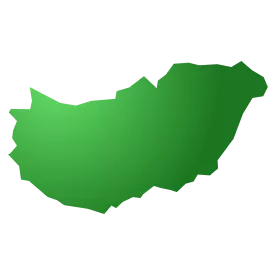
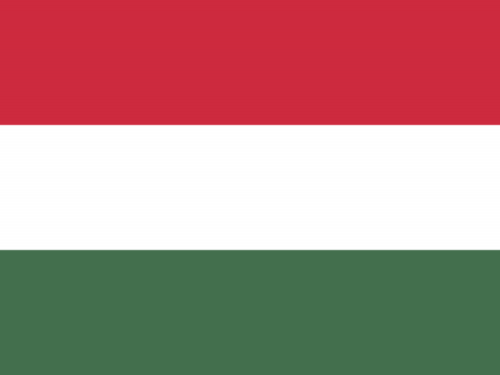
Discover Hungary
Fun Foods
Lángos, Goulash, Chicken Paprikash, Halászlé, Kürtőskalács, Dobos Torte
In the spring of 1974, a Budapest architecture teacher named Ernő Rubik built a little wooden cube to help his students understand how shapes move in 3D. Then he twisted it, scrambled the colors, and realized he couldn’t get it back.
Rubik reportedly needed weeks to solve his own puzzle. His “Magic Cube” went on sale in Hungary in 1977 and was renamed the Rubik’s Cube in 1980.
It became one of the best-selling toys of all time. A standard cube can be scrambled more than 43 quintillion different ways.
Hungary itself began more than 1,100 years ago. In 895, the Magyars, horse-riding tribes from the east, settled in the wide Carpathian Basin.
In the year 1000, their leader Stephen was crowned king with a crown sent by the Pope. That crown is still kept in Hungary’s Parliament.
Hungary grew into a major kingdom, but hard times followed. The Ottoman Empire ruled much of it for about 150 years, and then the Austrian Habsburgs took control.
Hungarians rose up in 1848 and lost. But in 1867, Hungary became an equal partner in Austria-Hungary.
After losing World War I, Hungary signed the Treaty of Trianon in 1920 and lost about two-thirds of its land. Millions of Hungarians suddenly found themselves living in other countries.
World War II brought the darkest chapter. In 1944, Nazi Germany occupied Hungary.
In less than two months, about 440,000 Jewish people were deported to the Auschwitz death camp, with Hungarian police and officials doing much of the work. More than half of Hungary’s Jews were murdered.
After the war, the Soviet Union controlled Hungary. In 1956, Hungarians rose up against Soviet rule, but Soviet tanks crushed the revolution, and thousands died.
Then, in 1989, Hungary cut down the barbed-wire fence on its border with Austria. It helped bring down the wall between East and West Europe.
Today, Budapest sits on more than 100 hot springs and is called the “City of Spas.” At the palace-like Széchenyi Baths, people play chess while soaking in steaming outdoor pools.
West of the city, families swim at Lake Balaton, the largest lake in Central Europe, nicknamed the “Hungarian Sea.”
For food, grab lángos, a puffy fried dough topped with sour cream and cheese. Try goulash, a beef stew colored red with paprika, Hungary’s favorite spice.
For dessert, unwind a kürtőskalács, or chimney cake, a spiral of sweet dough roasted over coals and rolled in sugar.
Sources: Hungarian Ministry of Foreign Affairs: The History of Hungary, Wikipedia: The Holocaust in Hungary, and Telex: Half a Century of the Rubik’s Cube.
Experience Points
EARN UP TO
1,000 XP
in Hungary — collect the sticker and the trading card.
Start your travel passportPoints Available
| Sticker | 750 XP |
| Trading Card | 250 XP |
| Total | 1,000 XP |

