
Mauritius
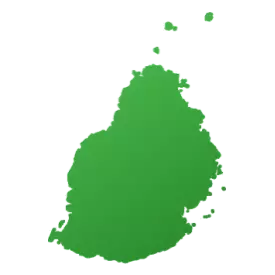
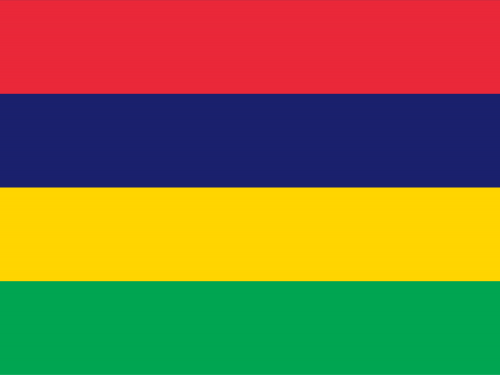
Discover Mauritius
Currency
Mauritian Rupee
Capital
Port Louis
Languages Spoken
English
Fun Foods
Dholl Puri, Farata, Gateaux Piments, Boulettes, Alouda
The dodo, the famous chubby bird that couldn’t fly, lived in only one place on Earth: Mauritius.
Dutch sailors arrived in 1598, and less than 70 years later, in 1662, someone made the last widely accepted dodo sighting.
The dodo had no natural enemies and no fear of people. Sailors hunted it, and the rats, pigs, and other animals they brought ate its eggs and wrecked its forest home.
Today the dodo is Mauritius’s national symbol, a reminder of how fast a species can vanish.
When those sailors landed, no people lived on Mauritius at all. Arab sailors had visited centuries before, but nobody had settled there.
The Dutch named the island after their leader, Prince Maurice of Nassau, then gave up and left in 1710.
France took over in 1715 and brought enslaved people from Africa and Madagascar to work on sugar plantations. Britain captured the island in 1810 and ended slavery in 1835.
Some enslaved people escaped and hid on Le Morne Brabant, a steep mountain by the sea. A sad legend says that when police climbed up to tell them slavery had ended, the runaways feared capture.
Many died rather than be taken, never learning they were already free. The mountain is now a UNESCO World Heritage Site.
After slavery ended, Britain brought more than 450,000 workers from India to work the sugar fields. They arrived at a dock in the capital, Port Louis, called the Aapravasi Ghat, also a UNESCO site.
Today most Mauritians have Indian roots, and the island also has African, Chinese, and European families.
Mauritius became independent on March 12, 1968. Just before that, Britain split off the faraway Chagos Islands and later forced up to 2,000 Chagossians from their homes to make room for a military base.
In 2025, Britain and Mauritius signed a deal to hand the islands to Mauritius. But it hasn’t been finalized, and some Chagossians say they were left out of the talks.
For adventures, visit the Seven Coloured Earths at Chamarel, where hills of sand glow red, brown, and purple.
Off Le Morne, take a helicopter ride to see the “underwater waterfall,” an illusion where sand sliding along the seafloor looks like water pouring into a hole in the ocean.
At Pamplemousses, one of the oldest botanical gardens in the Southern Hemisphere, see water lilies big enough to look like floating tables. At La Vanille Nature Park, walk among giant Aldabra tortoises.
And at the Blue Penny Museum, see two of the rarest stamps in the world, printed here in 1847.
For food, grab dholl puri, soft flatbreads filled with ground split peas and rolled up with curry and chutney. Try gateaux piments, crunchy fried chili fritters, then cool down with alouda, a sweet milkshake.
Sources: Wikipedia: British Mauritius, Wikipedia: British Indian Ocean Territory, and Vintage Mauritius: Chronology of Key Events.
Experience Points


EARN UP TO
1,500 XP
Collect the sticker and the trading card in Mauritius.
Start your travel passportPoints Available
| Sticker | 1,250 XP |
| Trading Card | 250 XP |
| Total | 1,500 XP |