Mozambique
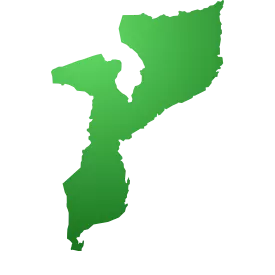
Discover Mozambique
Currency
Metica
Capital
Maputo
Languages Spoken
Portuguese
Fun Foods
Xima, Grilled Prawns, Frango à Zambeziana, Matapa, Clams with Coconut Milk, Piri-Piri Chicken
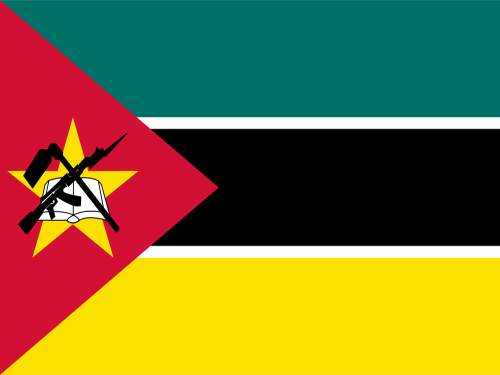
Mozambique’s flag has something no other national flag in the world has: a modern rifle. It sits crossed with a farmer’s hoe, on top of an open book and a yellow star.
Each picture has a meaning. The book stands for education, the hoe for farming, and the rifle for defending the country’s freedom.
Some Mozambicans want to remove the rifle as a sign of peace, so the flag is still debated today.
The country’s name has a story too. It comes from a small offshore island, the Island of Mozambique, once a busy trading port and now a UNESCO World Heritage Site.
And “Mozambique” uses all five vowels, A, E, I, O, and U, in a single word.
For centuries, Bantu-speaking farmers and fishers lived along this coast, trading with Arab merchants who sailed across the Indian Ocean. Then, in 1498, the Portuguese explorer Vasco da Gama arrived.
Portugal soon took control and ruled for nearly five centuries.
In 1964, a movement called FRELIMO began fighting for independence. After a revolution in Portugal itself, Mozambique finally became free on June 25, 1975.
But peace didn’t last. In 1977, a terrible civil war began between the new government and a rebel group called RENAMO.
By the time it ended in 1992, more than a million people had died, and about 1.5 million refugees had fled to neighboring countries. Fighting flared up again in later years until a new peace deal was signed in 2019.
Animals suffered too. During the war, soldiers hunted wildlife in Gorongosa National Park for food and for ivory to buy weapons, and more than 90% of its large animals disappeared.
So many elephants with tusks were killed that many of the survivors’ babies are born without tusks at all.
Since the war, Gorongosa has made an amazing comeback. Today more than 100,000 large animals roam the park again, including hundreds of elephants, lions, and wild dogs.
For adventures, go on safari in Gorongosa. Along the coast, the Bazaruto Archipelago is one of the best places to spot dugongs, gentle “sea cows” that graze on seagrass, along with turtles, manta rays, and humpback whales.
At Tofo, you can even snorkel beside whale sharks, the biggest fish in the sea.
For food, try xima, a thick cornmeal porridge, with grilled prawns fresh from the Indian Ocean. Matapa is a creamy stew of cassava leaves, peanuts, and coconut milk.
And for brave eaters, piri-piri chicken is grilled with a fiery little chili pepper.
Sources: National Geographic: African Wildlife Is Rebounding in Gorongosa, Facts Institute: Facts About Mozambique, and World Travel Guide: Mozambique Food and Drink.
Experience Points

EARN UP TO
1,250 XP
Collect the sticker and the trading card in Mozambique.
Start your travel passportPoints Available
| Sticker | 1,000 XP |
| Trading Card | 250 XP |
| Total | 1,250 XP |