

Kazakhstan
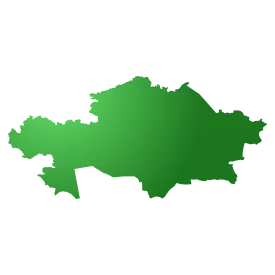
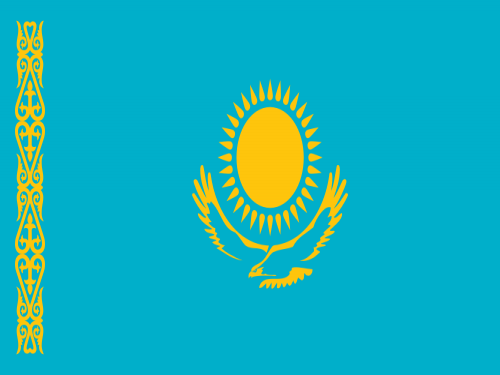
Discover Kazakhstan
Currency
Tenge
Capital
Nur-Sultan
Languages Spoken
Kazakh
Fun Foods
Beshbarmak, Baursak, Plov, Manti, Kuyrdak, Shashlik, Almaty Apples
The next time you bite into an apple, thank Kazakhstan. In the mountain forests outside the city of Almaty, wild apple trees still grow on their own.
Scientists have found they are the main ancestor of the apples sold in grocery stores around the world.
Bears, birds, and Silk Road traders carried the seeds far and wide over thousands of years. Even the city’s name comes from alma, the Kazakh word for apple, and Almaty has a giant apple statue and apple-shaped bus shelters.
Kazakhstan is the biggest country in Central Asia, a huge sweep of grassy plains called the steppe. For centuries, Kazakh families lived as nomads, moving their horses, sheep, and camels with the seasons and living in round felt tents called yurts.
That way of life was nearly destroyed in the 1930s. The Soviet Union, which ruled Kazakhstan, seized families’ animals and forced nomads to settle in one place.
A terrible famine followed. About 1.5 million people died, more than a third of all Kazakhs.
Later, the Soviets used the steppe as a testing ground for nuclear bombs. From 1949 to 1989, they set off 456 nuclear explosions near the city of Semipalatinsk.
Experts estimate that about 1.5 million people were exposed to the harmful radiation.
Kazakhs fought back, led by a poet named Olzhas Suleimenov, who started a huge anti-nuclear movement. In 1991, the test site was shut down for good.
That December, Kazakhstan became the very last Soviet republic to declare independence. The new country inherited the fourth-largest pile of nuclear weapons on Earth, and it chose to give every one of them up.
There’s a space story here, too. In 1961, the first person ever to fly into space, Yuri Gagarin, blasted off from Baikonur, a rocket base on the Kazakh steppe.
For adventures, hike Charyn Canyon, nicknamed Kazakhstan’s Grand Canyon, a maze of red rock walls stretching 154 kilometers (95 miles).
At Kaindy Lake, the trunks of a drowned spruce forest poke up out of bright turquoise water like giant toothpicks.
For food, the national dish is beshbarmak, which means “five fingers,” because it’s traditionally eaten by hand. It’s made of meat, wide flat noodles, and rich broth.
For dessert, grab a crunchy apple from an Almaty market, a fruit that started right here.
Sources: Smithsonian: Saving the Apple’s Ancient Ancestor in the Forests of Kazakhstan, Wikipedia: Kazakh Famine of 1930–1933, and Eurasianet: Legacy of the First Soviet Nuclear Test.
Experience Points


EARN UP TO
1,250 XP
Collect the sticker and the trading card in Kazakhstan.
Start your travel passportPoints Available
| Sticker | 1,000 XP |
| Trading Card | 250 XP |
| Total | 1,250 XP |