

Guyana
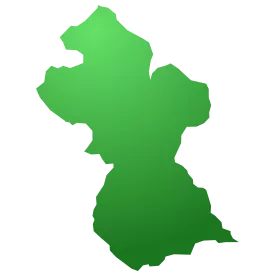
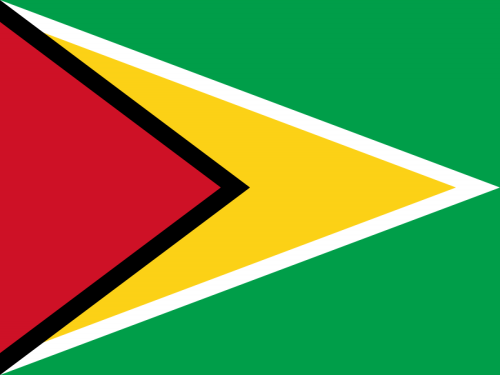
Discover Guyana
Currency
Guyanese Dollar
Capital
Georgetown
Languages Spoken
English
Fun Foods
Cook-Up Rice, Curry and Roti, Chicken Chow Mein, Pholourie, Pepperpot, Metemgee, Mango Sour
Deep in Guyana’s rainforest, the Potaro River pours off a cliff and plunges 226 meters (741 feet) in one straight drop. This is Kaieteur Falls, often called the largest single-drop waterfall in the world by the amount of water going over it.
Along the trail grow giant spiky plants called bromeliads, some taller than an adult. Their leaves hold little pools of rainwater, and inside them live tiny golden frogs.
These frogs are born, live, and die inside the plants, and they’re found almost nowhere else on Earth.
Guyana is the only country in South America where English is the official language. Its first people were Amerindian nations who lived along its rivers long before Europeans came.
In the 1500s, Dutch traders arrived and set up sugar plantations. They forced enslaved Africans to do the brutal work.
In 1763, an enslaved man named Cuffy led thousands of people in the Berbice Rebellion. For months, the rebels controlled much of the colony, and Cuffy even wrote letters to the Dutch governor proposing to split the land.
The Dutch eventually crushed the uprising. But Cuffy is now Guyana’s national hero.
Britain later took over and ended slavery in the 1830s. To keep the sugar fields running, the British brought workers from India, who signed contracts to labor for years, often in harsh conditions.
Today, people with Indian roots are Guyana’s largest group, alongside people with African, Amerindian, Chinese, and European roots.
Guyana became independent in 1966. In 2015, oil was discovered off its coast, and Guyana soon became the fastest-growing economy in the world.
There’s a disagreement over land, too. Venezuela claims the Essequibo region, about two-thirds of Guyana.
Guyana says the border was settled long ago, and the case is before the International Court of Justice.
For adventures, fly in a small plane to Kaieteur and peer over the edge into the mist. On the Rupununi savanna and in the rainforest, guides help visitors spot giant river otters, jaguars, harpy eagles, and black caimans, a kind of crocodile relative.
In the capital, Georgetown, visit the 1763 Monument honoring Cuffy. And if you’re lucky, you’ll catch a cricket match, the national passion.
For food, try cook-up rice, a one-pot dish of rice and beans cooked with meat. Curry with roti, a soft flatbread, came with the workers from India.
At Christmas, families make pepperpot, a rich stew flavored with cassareep, a dark syrup made from cassava root, first invented by Amerindian cooks.
Sources: Britannica: Guyana Economy, Wikipedia: Berbice Rebellion, and World Atlas: 10 Facts About Guyana.
Experience Points


EARN UP TO
1,250 XP
in Guyana — collect the sticker and the trading card.
Start your travel passportPoints Available
| Sticker | 1,000 XP |
| Trading Card | 250 XP |
| Total | 1,250 XP |