

Martinique

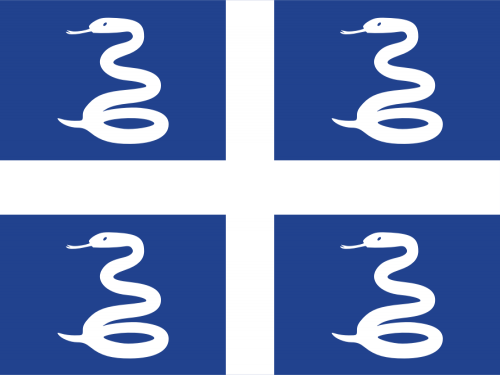
Discover Martinique
Currency
Euro
Capital
Fort-de-France
Languages Spoken
French
Fun Foods
Accras de Morue, Chicken Colombo, Grilled Lobster, Boudin Créole, Court-Bouillon de Poisson, Blanc-Manger Coco
On the morning of May 8, 1902, the volcano Mount Pelée exploded. In just minutes, a scorching cloud of gas and ash swept over the city of Saint-Pierre.
Almost everyone in the city, about 28,000 people, died.
One of the very few survivors was a prisoner named Ludger Sylbaris. He had been locked in a stone cell, partly underground, with only a tiny opening in the door, and its thick walls shielded him.
Rescuers heard him calling out days later. He went on to tour with the Barnum & Bailey circus, billed as “the man who lived through Doomsday.”
Saint-Pierre had been called the “Paris of the Caribbean.” Today, people call its ruins the “Little Pompeii of the Caribbean.”
Martinique is an island in the Caribbean, but it’s not its own country. It’s part of France.
Its first people were the Kalinago, but after France took control in 1635, the French drove the Kalinago off the island.
The French built plantations to grow sugar, coffee, and cocoa, and forced enslaved Africans to do the work.
In May 1848, news arrived that France was about to end slavery, but plantation owners delayed. On May 22, enslaved people in Saint-Pierre rose up and won their freedom that very day.
About 67,500 people were freed, and May 22 is still a holiday in Martinique.
Martinique was also the birthplace of Joséphine, who grew up on a sugar plantation and later married Napoleon to become Empress of France.
There’s an odd war story here too. In 1804, during a war between Britain and France, British sailors hauled cannons up Diamond Rock, a tall rock island off the coast.
The Royal Navy then officially listed the rock as a warship, HMS Diamond Rock. Its crew of about 100 men fired on French ships for more than a year before France took it back.
In 1946, Martinique stopped being a colony and became an official part of France. The change was championed by the poet Aimé Césaire, who served as mayor of the capital, Fort-de-France, for more than 50 years.
Today, explore the ruins of Saint-Pierre, or hike Mount Pelée. Snorkel at Anse Dufour, where sea turtles glide over the coral, and lie on the white sand of Les Salines beach.
At the Jardin de Balata, hummingbirds zip between giant tropical flowers.
For food, crunch into accras, little fried fritters made with salted fish. Try chicken colombo, a mild curry brought by workers from India.
And grilled lobster is a coastal treat.
Sources: Wikipedia: 1902 Eruption of Mount Pelée, IEDOM: Martinique History (Annual Report), and Wikipedia: Diamond Rock.
Experience Points


EARN UP TO
1,000 XP
Collect the sticker and the trading card in Martinique.
Start your travel passportPoints Available
| Sticker | 750 XP |
| Trading Card | 250 XP |
| Total | 1,000 XP |